Google Ads News
GBP Number

Google LSAs Showing Google Business Profile Number, Not Google Ads Number. Thanks for sharing Anthony Higman & Barry Schwartz.
Turn discovery into action with Google’s September Demand Gen Drop

Google is rolling out new Demand Gen capabilities designed to reduce friction between discovery, engagement, and conversion just in time for the holiday season.
Three updates stand out:Business Agent for YouTube AdsShoppers can interact with conversational AI alongside video ads with product feeds, getting answers about products and brands without leaving YouTube.
One-click experiences on YouTube Shorts & GmailImage ads can now take users directly to a landing page with a single tap. Google reports that advertisers adding Gmail to Demand Gen campaigns saw image creatives achieve an average 40% increase in conversions at the same ROI.
Affiliate Location Extensions in Google MapsRetailers, dealer networks, and other location-based businesses can capture local intent with promoted pins while consumers browse, search, and navigate in Maps.
Demand Gen

The Demand Gen FAQ has been updated to reflect a significant change in billing for Google Display Ads. Previously, Google Display Network (GDN) image inventory was billed on a CPC basis, but it has now shifted to a CPM model. Thanks for sharing Hana Kobzová.
New attributes

Google Merchant Center has introduced new attributes for CSS product pages. These updates include the Rating [rating], Minimum rating [minRating], Maximum rating [maxRating], and Review count [reviewCount] attributes.
Thanks for sharing Hana Kobzová.
2 new investements models

Google Ads is making budget allocation more strategic with two new investment modes: Holistic and Growth.
The difference is simple, but important:Holistic mode reallocates existing budget from underutilized or less efficient campaigns toward stronger performers.
Growth mode adds incremental budget to top-performing, budget-constrained campaigns without reducing spend elsewhere.
In other words:→ Holistic: How should I spend my existing budget better?
→ Growth: Where should I invest my next incremental dollar/euro?What makes this update interesting is the broader direction.
Google Ads is increasingly encouraging advertisers to think about their account as an investment portfolio, rather than a collection of independently managed campaigns.
The opportunity is clear: better allocation of marginal budget.But advertisers should still look closely at what is driving the forecasted uplift especially when Google recommends changing Target CPA or Target ROAS alongside the budget.More budget and a looser efficiency target are not the same optimization decision.
Google says forecasts are generally based on a 7-day horizon, so I’d treat these recommendations as useful inputs for decision-making, not automatic instructions.
Thanks for sharing Barry Schwartz.
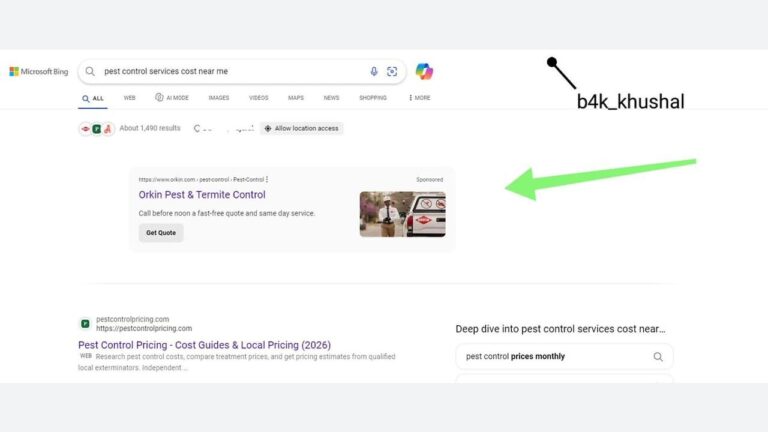
New LSA Test

Google is testing a redesigned Local Services Ads format that makes the ads much more prominent in search results.
The new layout features larger images and a bigger highlighted section beneath each listing, giving the ads significantly more visual weight.Anthony Higman spotted the test.
New budget recommendation

Google Ads appears to be testing a more aggressive budget recommendation feature that ties budget changes directly to forecasted conversion value.
When advertisers reduce a campaign’s daily budget, Google may show projected weekly conversion value declines, “limited by budget” warnings, and prompts to increase spending to reach the forecast.
PPC specialist Thomas Eccel highlighted the feature on LinkedIn, calling it intrusive and frustrating because advertisers may have legitimate reasons to lower budgets.
He also noted that the warning can continue to appear in the campaign’s budget settings afterward.
Slovenia

Starting October 1, 2026, Google’s gambling policy for Slovenia will be updated.
The new policy allows licensed operators to advertise sports betting, online casino games, and online gambling, provided they have a valid concession from the Government of Slovenia and registration with the Ministry of Finance.
Summaries

Google AI Mode is now showing longer summaries above brand ads, expanding how ads are presented within AI-powered search results.
Previously, shorter summaries had been spotted below ecommerce ads. This newer format appears different, placing a more detailed summary above the ad and seemingly focusing on brand-related queries.
The added context could give users more information before clicking, potentially changing how brand ads are evaluated and engaged with inside AI Mode.
Credit to Sachin Patel of Search Engine Watch for reporting the update.
DSA

Google Ads has added new guidance for testing AI Max against Dynamic Search Ads (DSAs) using experiments.Advertisers can compare performance through either custom experiments or Google’s AI Max experiment template.
Custom experiments allow the test campaign to upgrade to AI Max and, if successful, apply those changes back to the original campaign.
The template is not available for 100% DSA campaigns. In mixed campaigns, only the standard ad groups are upgraded to AI Max, while dynamic ad groups remain unchanged.
The update gives advertisers a clearer way to evaluate AI Max as Google continues moving away from Dynamic Search Ads.Credit to Barry Schwartz for sharing!
New API Test

Google has released Google Ads API v25.2, a minor update that adds several new capabilities for advertisers and developers.
Highlights include competitive benchmark percentile metrics, the ability to create Performance Max drafts from Smart campaigns, new asset group URL options, and Search bid adjustment recommendations, along with additional API improvements.
To use the new features, developers need to upgrade their client libraries and update their code to the latest version.
Credit to Barry Schwartz for reporting the update.
AI Brief

Google is expanding AI Max with broader access to AI Brief and a new reporting feature designed to make AI-driven Search performance easier to understand.
The AI Brief closed beta is now rolling out in Dutch, French, German, Italian, Japanese, Portuguese, and Spanish. AI Brief lets advertisers provide detailed natural-language guidance about their business, audience, and messaging to help steer AI Max.
Google is also introducing a unified Search ads journey report that connects the search term, the creative assets shown, and the landing page visited in one view.
The new reporting is intended to give advertisers more visibility into how AI Max matches queries, assembles ads, and directs users to different pages across their website.
Legal update
Google Ads has expanded its Legal Requirements policy guidance with additional local advertising and marketing codes for Argentina, Australia, Chile, Colombia, Paraguay, and South Africa.
The update gives advertisers more references for understanding country-specific advertising rules, including standards issued by local advertising bodies and industry organizations.
Google emphasizes that these references do not replace its own advertising policies and are not an exhaustive guide to local law. Advertisers remain responsible for ensuring campaigns comply with all applicable legal and regulatory requirements in every market they target.
For international advertisers, the change reinforces the importance of reviewing local advertising standards before launching or expanding campaigns into new countries.
VTC Demand Gen

Google Ads is now enabling view-through conversion (VTC) optimization by default for newly created Demand Gen campaigns.
Previously, the setting was off by default and only supported YouTube and Discover Feed; it now also supports Display inventory.VTC optimization remains limited to video assets across YouTube, Display, and Discover Feed. View-through conversions are still only partially biddable and do not appear in the main Conversions column.
The feature remains in open beta and is available to interested advertisers.Thanks for sharing Hana Kobzová.
Customer match

Google Ads Customer Match now supports IP address and user interaction timestamp as additional matching keys, which may improve match rates.
These fields must be uploaded unhashed.The feature is not available for users in the EEA, UK, or Switzerland, so advertisers must exclude those regions from IP sharing and ensure appropriate consent and disclosures.
The Customer Match upload format has also been updated to include the new “User IP address” and “User Interaction timestamp” columns, alongside existing identifiers such as email, phone, address, and device ID.
Google has also adjusted some help-page wording from customer data being “shared” to being “collected.”Thanks for sharing Hana Kobzová.
Update AI Max

Google Ads has updated the AI Max interface to give advertisers more explicit control over how campaigns handle branded searches.
Advertisers can now choose to show ads across all relevant searches, manage branded traffic using brand inclusions and exclusions, or restrict ads to unbranded searches only.
The update makes brand-related targeting controls more visible and easier to manage directly within the AI Max setup.
Thanks for sharing Bia Camargo
New test

Google Ads will run a six-month U.S. Search pilot starting in October 2026 that allows advertising for a limited set of firearm accessories, while keeping firearms, ammunition, and regulated components prohibited.
Checkout

Google is expanding native AI checkout to eligible Shopify merchants, allowing shoppers to buy products directly inside Google Search’s AI Mode and the Gemini app instead of being sent to the merchant’s website.
For qualifying U.S.-based Shopify stores, direct checkout can be enabled automatically when the store is connected to Google Merchant Center.
The system uses Google’s Universal Commerce Protocol (UCP), which connects AI shopping experiences with merchant and payment systems.
The key points are:Eligible products can be discovered and purchased entirely within Google’s AI experiences.
Shopify merchants may be automatically opted in, with no additional setup required.Merchants can opt out under Sales channels > Agentic, while still allowing products to appear in Google AI results.Merchants retain the customer and order relationship, but native checkout does not support every Shopify feature, including some checkout blocks, bundles, custom pixels, and certain client-side Google Analytics tracking.
This could create measurement and customer-experience differences, so merchants should review their Agentic checkout settings.
Thanks for sharing Menachem Ani Ⓜ️.
GA4

GA4 now lets you allowlist approved hostnames, giving you tighter control over where your tracking data can come from.
Edit ROAS

Arpan Banerjee discovered that you cannot edit your ROAS while promotion mode is active!
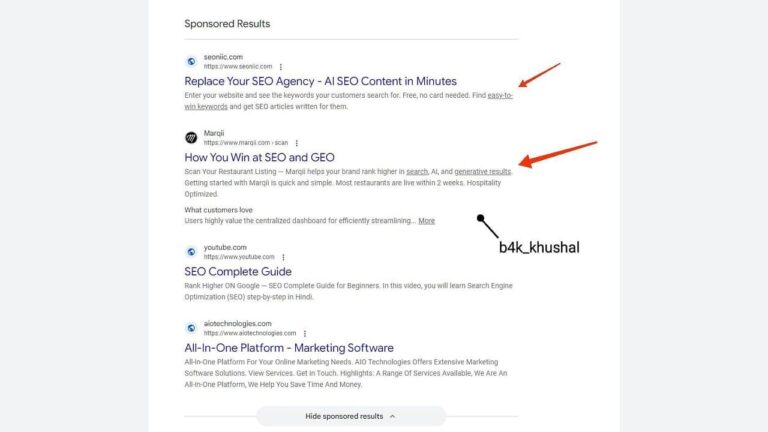
New Design test

Google is testing another new design for sponsored results. Now, Google is showing the last two sponsored websites in a row using a different design than the others. Sometimes Google displays four sponsored results in a row on mobile the first two with one design, and the last two with a different one.
Thanks for sharing Sachin Patel
Renaming

Google has renamed the AI Max search terms report view from “Search terms and landing pages from AI Max” to “Search terms and ad combinations.”The functionality appears unchanged: advertisers can still see the search terms, headlines, landing pages, campaigns, and ad groups involved in the ad journey.
The main impact is on reporting terminology and documentation. Anyone creating AI Max training materials, internal guides, or reporting processes should update the name to match Google’s latest wording.
Thanks for sharing Hana Kobzová
Ask Advisor

Google has expanded Ask Advisor in Google Ads from a Q&A assistant into a tool that can take direct account actions.
Advertisers can now use it to pause or rename campaigns, change daily budgets, adjust location targeting, appeal disapproved ads, and update final URLs.
It can also retain certain business preferences, such as a focus on ROAS, and provide broader insights around peer performance and seasonal trends.
Google has added more troubleshooting use cases as well, including help with identity verification and promotional code issues. The feature is still in beta and is not available in MCC accounts.
Thanks for sharing Hana Kobzová
Multi source conversions

Google has expanded its multi-source conversions beta to let offline uploads fill in missing user data from tag-based conversions.
That means if a website tag captures a conversion without complete details such as email, phone number, or address, offline data can now supplement those fields to improve enhanced conversion matching.
The beta also supports updating conversion values with more accurate CRM data, such as finalized order totals or later financial adjustments.
Google recommends uploading offline data within 24 hours for best performance.
A few limitations remain: GCLID and some other fields are ignored for already matched transactions, and conversion value updates are disabled during the initial 14-day trial period.
For advertisers, the main benefit is more complete measurement and more accurate conversion values when online and offline data are combined.
Thanks for sharing Hana Kobzová
Local commerce DACH

Google has eased its impressum requirements for local commerce features in parts of the DACH region.
Merchants in Germany and Austria no longer need to provide an impressum URL for Local Inventory Ads or free local listings.
The requirement now applies there only when Google itself hosts in-store product and price availability.Switzerland is unchanged and still requires an impressum for all local ads.
For merchants in Germany and Austria, this removes one compliance step when setting up local listings and inventory ads, making those features a bit easier to activate.
Thanks for sharing Hana Kobzová.
Bidding update

Google has updated its guidance on Smart Bidding learning periods. Instead of saying campaigns may need up to 3 weeks or 1–2 conversion cycles to calibrate, Google now says learning can take around 50 conversion events or 3 conversion cycles.
The change puts more emphasis on conversion volume, which is especially important for lower-volume accounts that may take longer to gather enough data.
Google has also added Performance Max campaigns to its conversion-goal best-practices documentation.
Thanks for sharing Hana Kobzová.
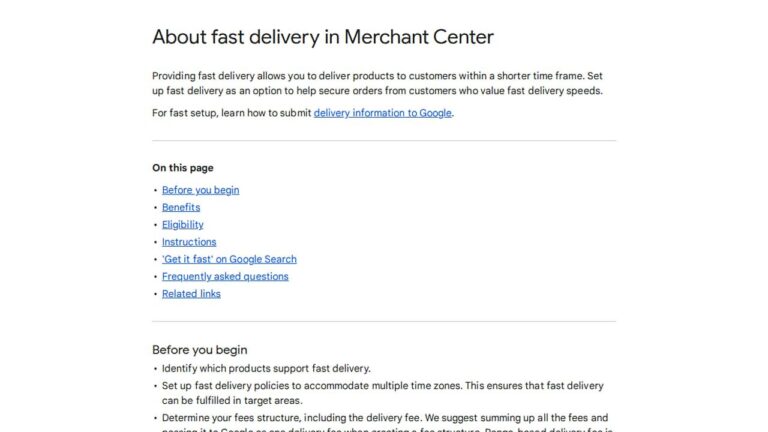
Merchant

Arpan Banerjee discovered that it takes 24-72 hours before a vide is validated in Merchant Center!
Turn on AI Max

Arpan Banerjee discovered that Google suggests turning on AI Max for more campaigns right after he enables it for one.