Here’s why most Meta accounts aren’t actually optimizing for profit ↓
“Performance” in Meta usually means revenue.
But revenue ≠ profit.
That disconnect is where growth stalls.
This is the real Meta Ads problem, in sequence:
Tracking misses conversions
Browser restrictions and blockers create blind spots.
Your algorithm optimizes on incomplete data.
Algorithms optimize for revenue, not profit
Meta doesn’t know your margins.
So it scales what looks big not what’s actually profitable.
No reliable new vs returning customer view
You think you’re acquiring customers.
Often, you’re just re-selling to existing ones.
Attribution + low EMQ limit signal quality
Weak event match quality = weaker optimization.
Garbage in, scaled garbage out.
So what actually fixes this?
A profit-first structure:
Server-side tracking
Capture 100% of consented conversions.
Give the algorithm full signal.
Optimize for profit (POAS), not ROAS
Feed Meta margin-level data.
Let it optimize for contribution, not vanity revenue.
Real-time new vs existing customer segmentation
Stop overpaying for returning buyers.
Allocate budget to real acquisition.
28-day lifetime profit tracking
Teach Meta what a customer is worth beyond day 1.
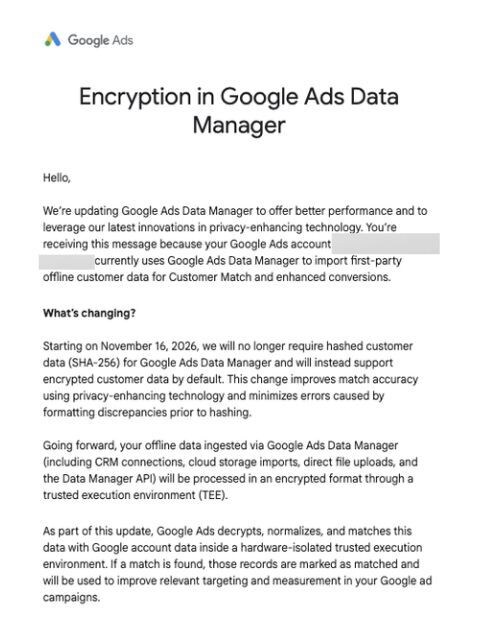
First-party data for stronger EMQ
Better match quality = stronger learning phase stability.
Most brands aren’t “bad at Meta”.
They’re optimizing the wrong metric.
When you switch from ROAS to profit-based optimization:
– Budget conversations change
– Scaling decisions change
– Client reporting changes
– Growth quality changes
The accounts that win in 2026 won’t be the ones with the highest ROAS.
They’ll be the ones that can prove profit behind every ad.