Google Ads News
Looker Studio update

Report editors can now allow report viewers to manually refresh report data.
When editors enable the new Viewer data refresh option in report settings, viewers can refresh data for a component by right clicking the component, or refresh data for a report by selecting the option in the three-dot menu.
Policy update

On July 1, 2026, Google Ads will update the US country-specifics of its Gambling and games policy.
Google will begin permitting Daily Fantasy Sports ads in Colorado for operators licensed by the state’s Department of Revenue’s Division of Gaming (CDOG).
Advertisers must apply for certification.The Gambling and games policy page will be updated when the policy goes into effect on July 1, 2026.
OpenAI

OpenAI Ads Manager Beta has launched in the UK, offering businesses a simple, quick setup with no bank details required.
The platform supports campaigns, billing and user access, though each user can currently create only one account, so clients should invite agencies or freelancers rather than have them create accounts on their behalf.
SHOPIFY UPDATE WILL F*CK UP YOUR ACCOUNT

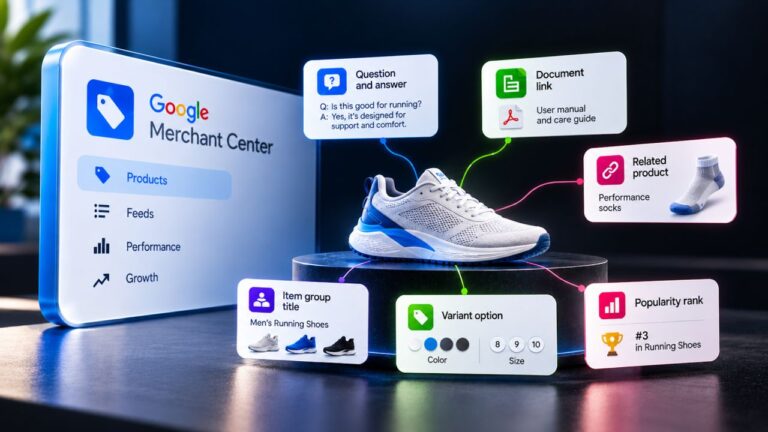
Merchant Center legend Emmanuel Flossie discovered that Shopify merchants preparing to migrate the Google & YouTube app are being warned about a product ID change that could disrupt Google Ads performance.
After migration, product IDs may switch from country-specific formats such as Shopify_US_12345_67890 to a new format using ZZ, for example, Shopify_ZZ_12345_67890.
Because Google treats the updated IDs as new products, advertisers could lose the connection to historical clicks, conversions, campaign learning, and optimization data. This may cause a temporary decline in campaign performance while Google rebuilds its understanding of the product catalogue.
A second concern is that the updated app may automatically submit product feeds for all enabled Shopify Markets, rather than only the merchant’s primary market.Merchants are advised not to uninstall and reinstall the app without first reviewing their feed setup. One suggested solution is to use a third-party feed management app.
This may allow businesses to retain their existing product ID structure and preserve historical advertising data.
The issue cannot be resolved using Google Merchant Center feed rules, as product IDs in a primary feed cannot be changed through those rules.
Recovery times may vary. Well-optimized accounts could recover within a few days, while accounts with less data or weaker optimization may take several weeks or longer.
The migration deadlines are February 28, 2026, for beta Merchant API users and August 18, 2026, for Content API users.
For more information, check this YouTube link.
Text assets

Arpan Banerjee discovered that Google Text disclaimers are now being shown in Assets!
Banner update

A cookie banner is no longer just a banner. It is becoming a key control point between Google Analytics and Google Ads.
Since June 15, 2026, Google Consent Mode has become the single control for collecting Google Ads cookies and identifiers through the Google Analytics tag and SDK.
Later in 2026, Google also plans to make the ad_personalization consent signal the main control for whether Analytics data shared with a linked Google Ads account can be used for personalized advertising.
I use Cookiebot Web CMP by Usercentrics to collect consent and communicate visitors’ choices to Google through signals including:
– ad_storage
– analytics_storage
– ad_user_data
– ad_personalization
But simply installing Cookiebot is not enough. The default consent state, category mapping, tag behavior and consent updates must all be configured correctly.For businesses using Cookiebot, GA4 and Google Ads, now is a good time to verify that:
• consent is set correctly before the visitor chooses
• each signal updates after the visitor accepts or rejects
• Google tags behave according to those choices
• Analytics and Ads links reflect the intended data flow
The banner is what users see.The consent signals and tag configuration behind it are what make their choice meaningful.
Leads live

Arpan Banerjee discovered that Google-hosted form leads are now live inside Conversions!
Partners tool

Arpan Banerjee just got access to the new Partners tool for Pmax! Looks like more people are now seeing it:)
GA4 Shopify update

Starting in July 2026, Google Analytics will automatically receive e-commerce events, including purchases, directly from Shopify for stores using the Google & YouTube app.
The new server-to-server integration is intended to improve measurement accuracy and recover conversion signals that may otherwise be lost. No action is required, as it will be enabled automatically.
Merchants who do not want to use the integration can disable it through the Google & YouTube app in Shopify.
Ask Ad Manager

Google is launching Ask Ad Manager, a Gemini-powered conversational AI agent for publishers. It helps troubleshoot delivery issues, generate actionable performance insights, and navigate directly to correctly configured campaign pages all within the Ad Manager interface.
The agent uses each publisher’s first-party data for personalized guidance; that data is neither shared nor used for model training. The beta rollout begins this month, with broader availability planned later this year.
New Github tool

Turn product images into professional video ads with Scene Machine, Google’s new open-source tool built on Google Cloud and powered by Google AI.
Quickly create, iterate, and export video ads for PMax, Demand Gen, and more without traditional production costs. Link.
Additional tracking

Google Ads has launched a beta that lets advertisers strengthen conversion tracking by adding backend data such as CRM records to their Google tag.
This can help recover signals lost to ad blockers and browser restrictions, improve automated bidding with more complete conversion data, and simplify integration through Google Ads Data Manager. Setup must be completed manually using the Google tag or Google Tag Manager.
Thanks for sharing Hana Kobzová.
Google Ads is updating Smart Bidding strategy names

Starting in June 2026, Google Ads is separating target-focused bidding strategies from volume-focused strategies more clearly.
The following UI labels are changing:
• “Maximize conversions with a Target CPA” → “Target CPA”
• “Maximize conversion value with a Target ROAS” → “Target ROAS”Maximize Conversions and Maximize Conversion Value will remain available for advertisers who want to maximize volume within their budget without setting a specific target.
Importantly, this is a naming and organizational update only:
✅ No change to bidding behavior
✅ No expected impact on campaign performance
✅ No action required for existing campaigns
For Google Ads API users, the change brings the interface more closely in line with standalone TARGET_CPA and TARGET_ROAS strategy types.
Developers should review:
• How integrations and dashboards display bidding strategies
• Campaign-creation logic using Maximize strategies with optional targets
• Future API updates involving BiddingStrategyType, TargetCpa, TargetRoas, target_cpa, and target_roas
The main distinction is becoming clearer: maximize strategies prioritize volume, while target strategies prioritize achieving a specified efficiency target.
Mixing Ads

Google Image Search Mixes Ads Within Organic Results. Found by Barry Schwartz & Paul Graham.
Customer list

To help you maximise the value and performance of your first-party data, Google is turning on the conversion-based customer lists feature for your account(s) beginning on 17 June 2026, and data will begin to be processed on 18 August 2026.
Label

Google Ads will automatically label conversion-based customer lists starting August 2026.
To stay in control, classify your lists in Audience Manager before the deadline.Update highlighted by Bia Camargo & Hana Kobzová
Limited serving

Google is expanding its Limited Ad Serving policy on Search from June 2026, with a gradual rollout through 2028.
Advertisers may see reduced impressions if they receive frequent user complaints, use unclear branding, reference other brands ambiguously, or run overly generic ads.
The takeaway: make your brand identity clear across ads and landing pages, use specific messaging, and explain any connection to other brands.
New Tab

Marcin Wsół & Hana Kobzová discovered this new Summary Tab Added in Google Ads Security Settings.
Billing Demand Gen

Arpan Banerjee got the message that Google Ads is changing how certain Demand Gen campaigns are billed on Discover.
Starting July 15, 2026, campaigns using view-through conversion (VTC) optimization will move from cost-per-click (CPC) billing to cost-per-thousand impressions (CPM) billing on the Discover channel.The rationale: when campaigns optimize for conversions that happen after someone sees an ad rather than clicks it, impression-based billing may better reflect the value being delivered and align more closely with the campaign’s optimization goal.A few key points:
• The change only affects a limited number of advertisers using VTC optimization on Discover.
• Campaigns without VTC optimization are not expected to be affected.
• The transition will happen automatically.
• Advertisers who do not want to move to CPM billing can opt out of VTC optimization in their campaign settings.
For advertisers and agencies, this is a good moment to review affected campaigns, reassess CPMs and impression quality, and check whether current attribution and optimization settings still align with business objectives.
Google has announced three important bidding and budgeting updates for Google Ads

Smart Bidding Exploration expansion
Smart Bidding Exploration helps advertisers reach new users through queries that may currently be out of reach, without changing core campaign targeting.
It is now available globally in all languages for Search campaigns and Performance Max campaigns without a product feed.
Google has also opened the beta for Shopping ads across Performance Max campaigns with a product feed and standard Shopping campaigns.
Promotion mode (Beta)Promotion mode allows advertisers to schedule temporary changes to ROAS tolerance and add extra daily budget during high-demand periods.
This could be especially useful for seasonal events, flash sales and product launches. It can also be combined with a campaign total budget.
The beta is now available for Search and Performance Max campaigns.
Bidding target optimization update
From August 17, Google will update its backend bidding target optimization to help budget-limited campaigns deliver more predictable performance in line with CPA and ROAS targets, particularly when budgets increase.
Google says some advertisers may see minor performance fluctuations during a brief calibration period.
Account notifications will begin appearing from July 6, giving advertisers time to review historical performance and adjust CPA or ROAS targets where needed.
A good moment to review whether your current bidding targets still align with your business goals.
Week 25 finished