Conversions

SEO vs SEA

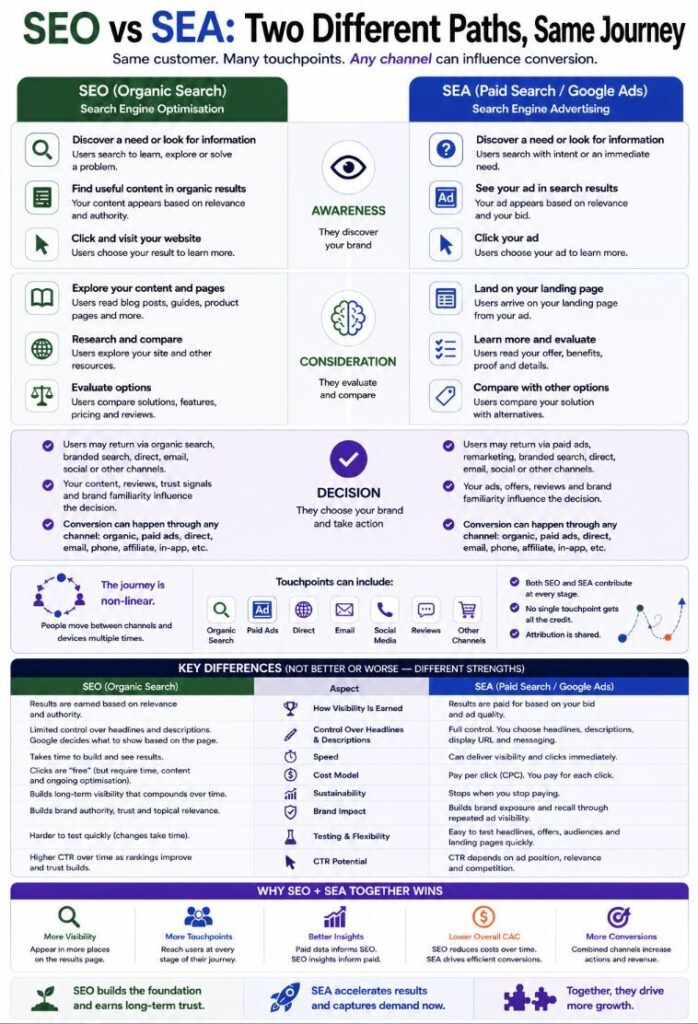
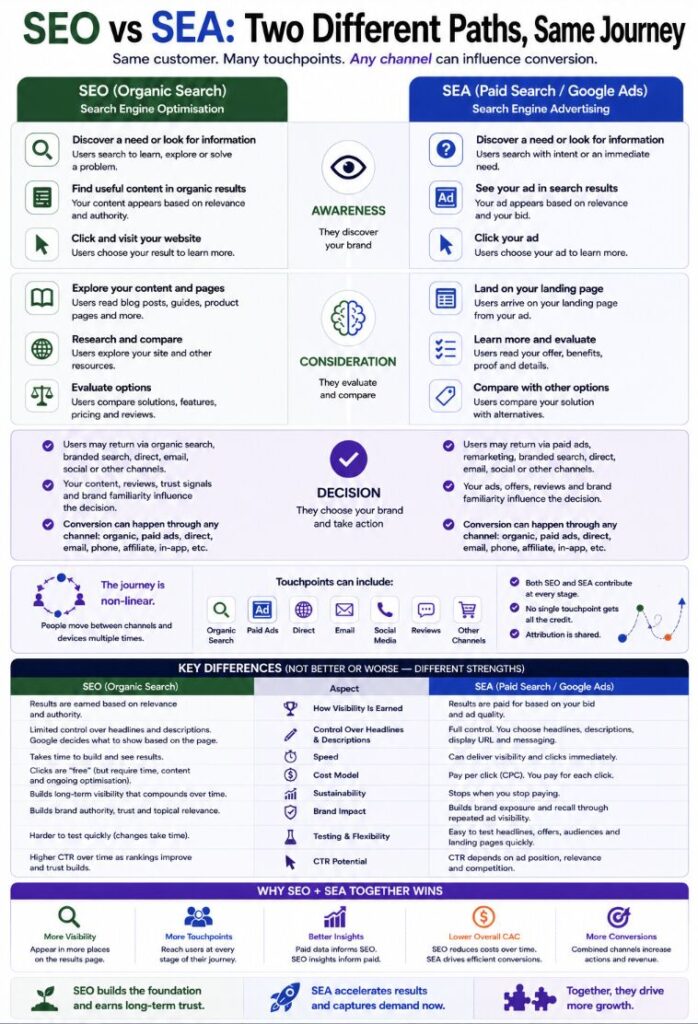
Most marketers compare SEO vs Google Ads like one replaces the other. That’s the wrong way to think about it. They’re not competing journeys. They’re different ways of influencing the same customer. A real customer journey today might look like this: → discovers you through SEO→ sees your Google Ads later→ reads reviews→ clicks a […]
SEO vs SEA Read More »

Why Meta Conversions API (CAPI) isn’t enough anymore

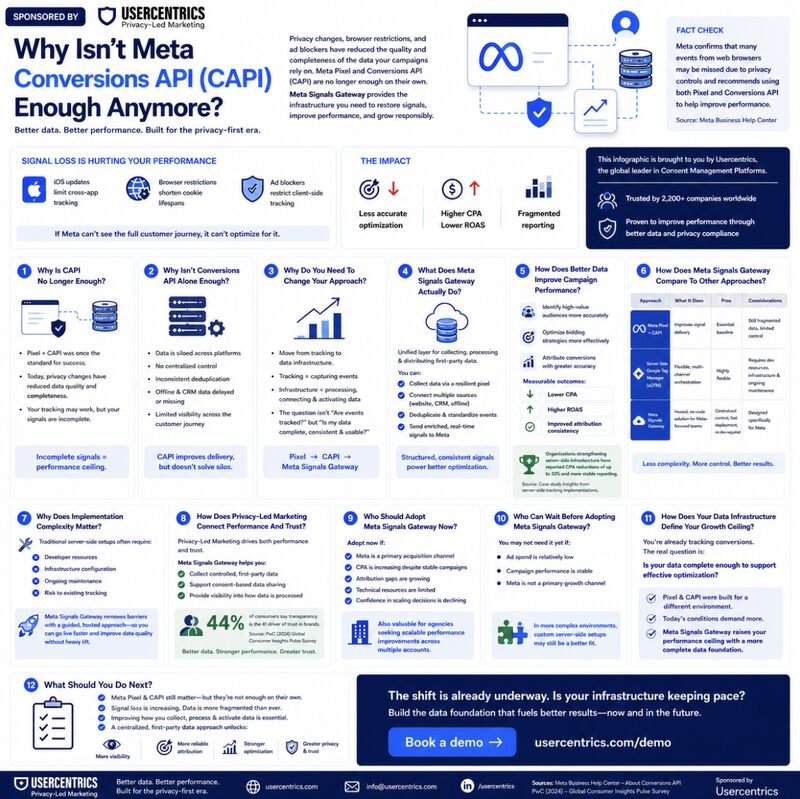
Most teams think their tracking is “done” once Meta Pixel + CAPI are set up. But here’s the reality Performance is declining not because tracking is broken, but because data quality has changed. What’s happening: • iOS & privacy updates limit tracking visibility• Browsers shorten cookie lifespans• Ad blockers reduce client-side signals Result: Signal loss

Why Meta Conversions API (CAPI) isn’t enough anymore Read More »

Unified measurement is getting a major upgrade

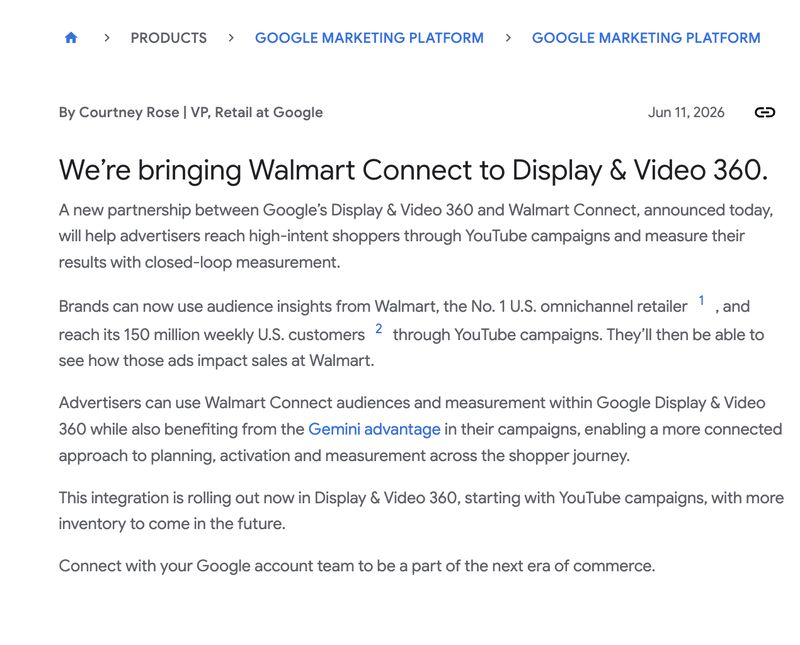
Another important update from Google at Google Marketing Live: unified measurement is getting a major upgrade. Meridian, Google’s open-source Marketing Mix Model, is coming to Google Analytics 360. This gives marketers a more complete way to connect data, measure impact, and forecast results. Key updates: Unified insightsCombine first-party data, cross-channel performance, and media signals in

Unified measurement is getting a major upgrade Read More »

Bad, Better, Best: Conversion Tracking in Google Ads 📈

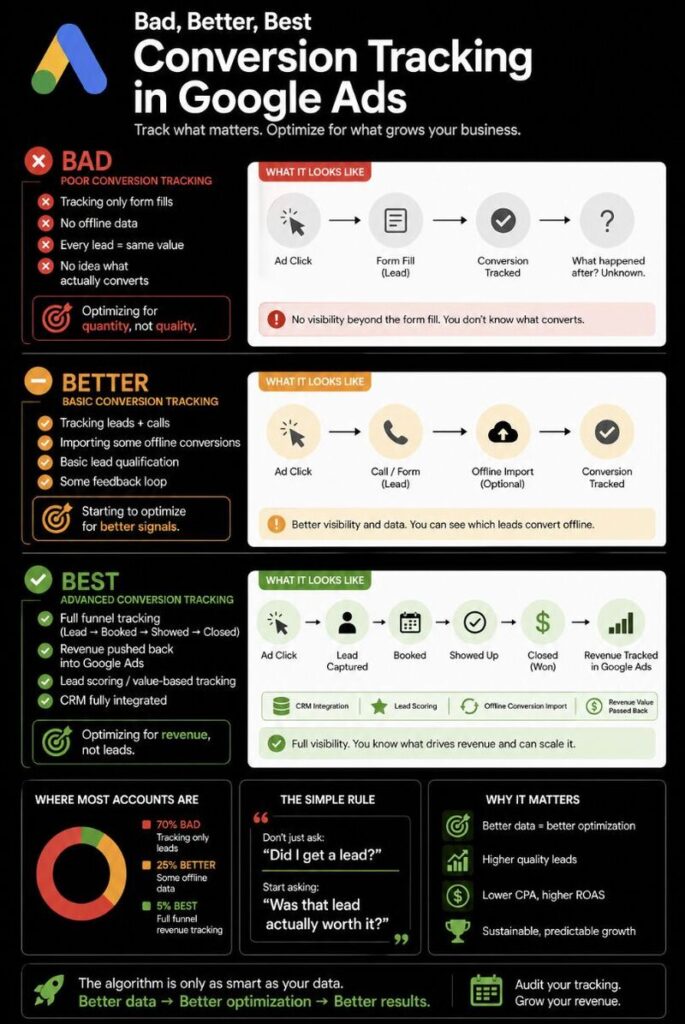
Your data is either driving growth… or quietly killing your results. Here’s where most accounts stand 👇 ❌ Bad Tracking only form fillsNo offline dataEvery lead = same valueNo idea what actually converts→ Optimizing for quantity, not quality ⚠️ BetterTracking leads + callsImporting some offline conversionsBasic lead qualificationSome feedback loop→ Starting to optimize for better

Bad, Better, Best: Conversion Tracking in Google Ads 📈 Read More »

Most marketers compare SEO vs Google Ads like one replaces the other

That’s the wrong way to think about it. They’re not competing journeys. They’re different ways of influencing the same customer. A real customer journey today might look like this: → discovers you through SEO→ sees your Google Ads later→ reads reviews→ clicks a remarketing ad→ searches your brand again→ converts direct Or the reverse. That’s

Most marketers compare SEO vs Google Ads like one replaces the other Read More »

Why Meta Conversions API (CAPI) isn’t enough anymore

Most teams think their tracking is “done” once Meta Pixel + CAPI are set up. But here’s the reality Performance is declining not because tracking is broken, but because data quality has changed. What’s happening: • iOS & privacy updates limit tracking visibility• Browsers shorten cookie lifespans• Ad blockers reduce client-side signals Result: Signal loss

Why Meta Conversions API (CAPI) isn’t enough anymore Read More »

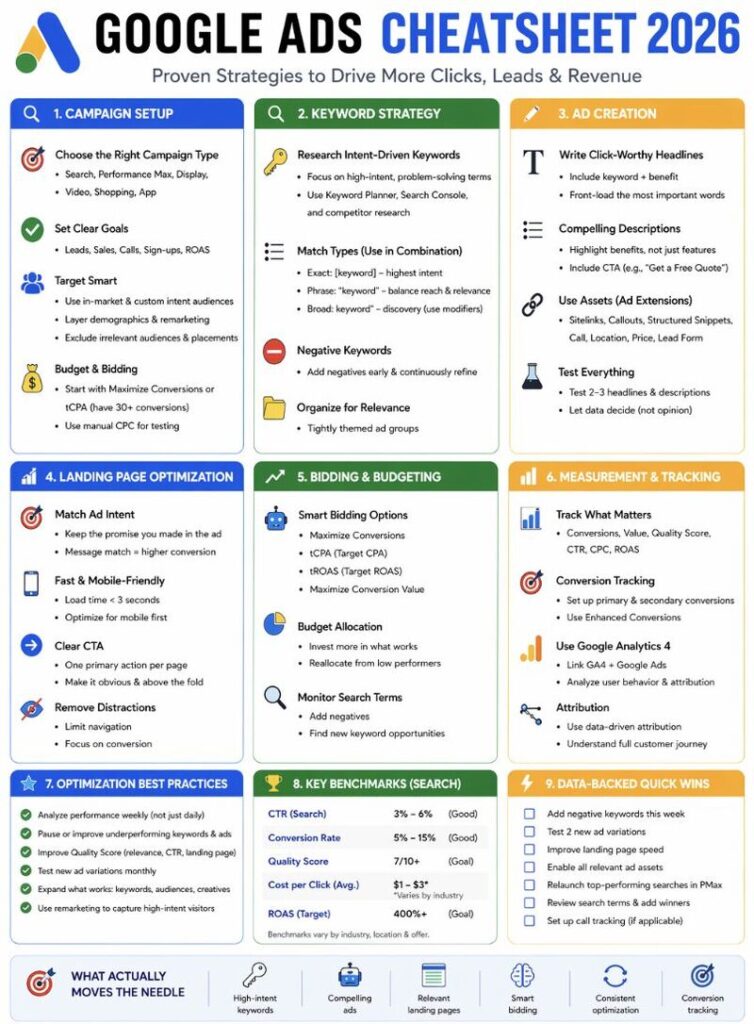
🚀 THE GOOGLE ADS GROWTH ROADMAP (2026 EDITION)

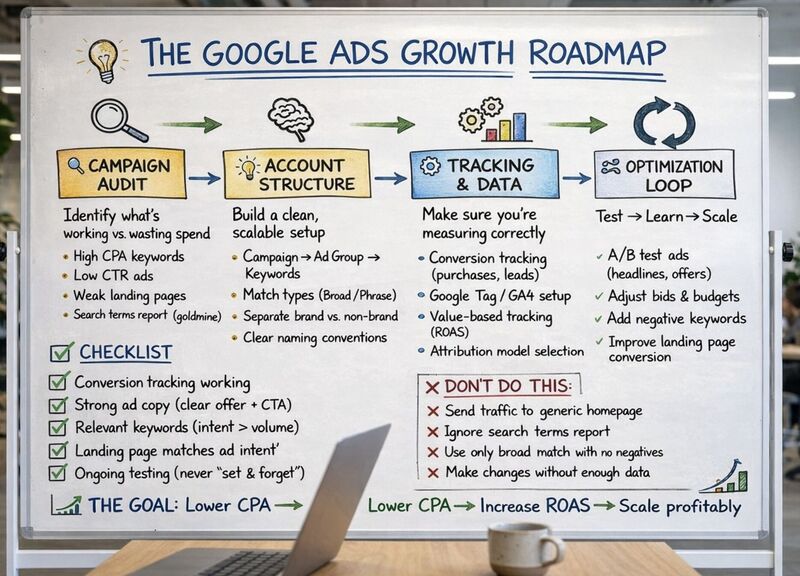
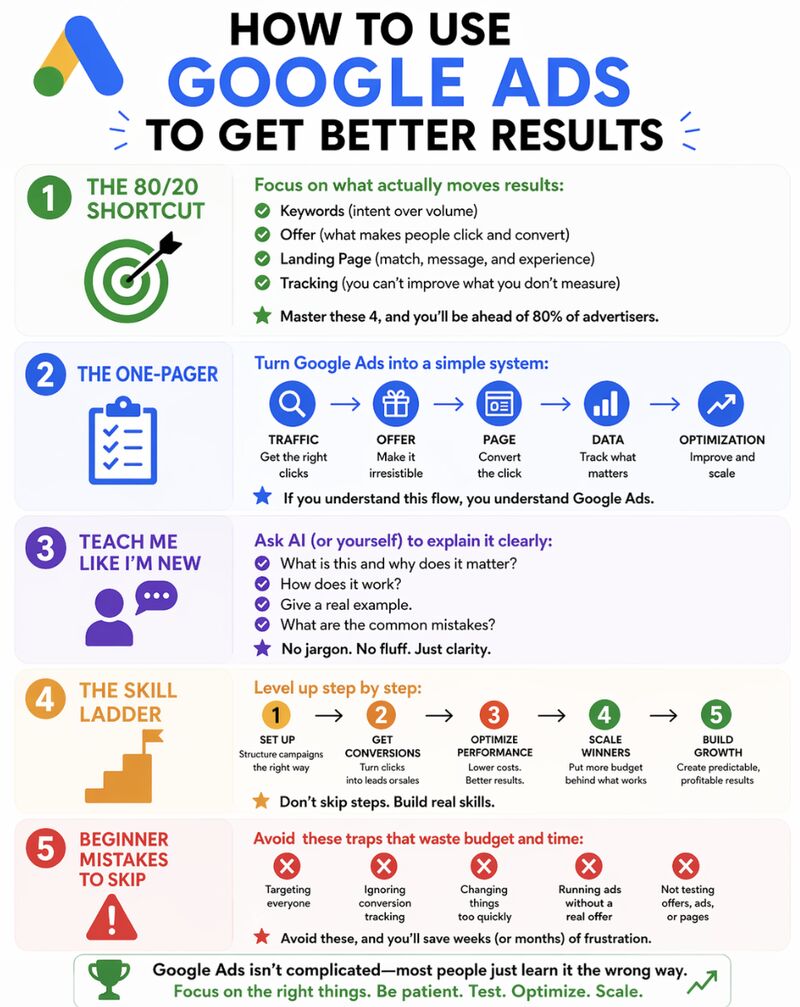
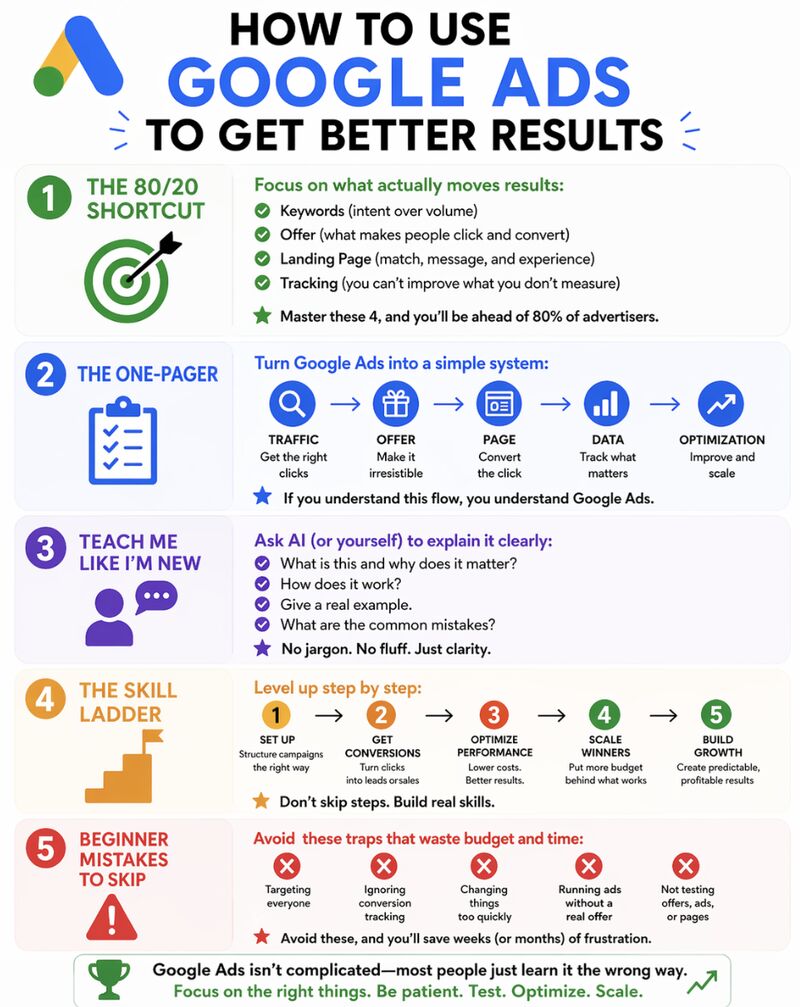
Most Google Ads accounts don’t fail because of budget. They fail due to structural issues, tracking problems, and wasted spend. Here’s the simple roadmap we use to scale profitably: 🔍 1. Campaign Audit Identify what’s working vs. wasting spend• High CPA keywords• Low CTR ads• Weak landing pages• Search terms report = goldmine 🧠 2.

🚀 THE GOOGLE ADS GROWTH ROADMAP (2026 EDITION) Read More »

Your Google Ads Algorithm is Bidding On Blind Data

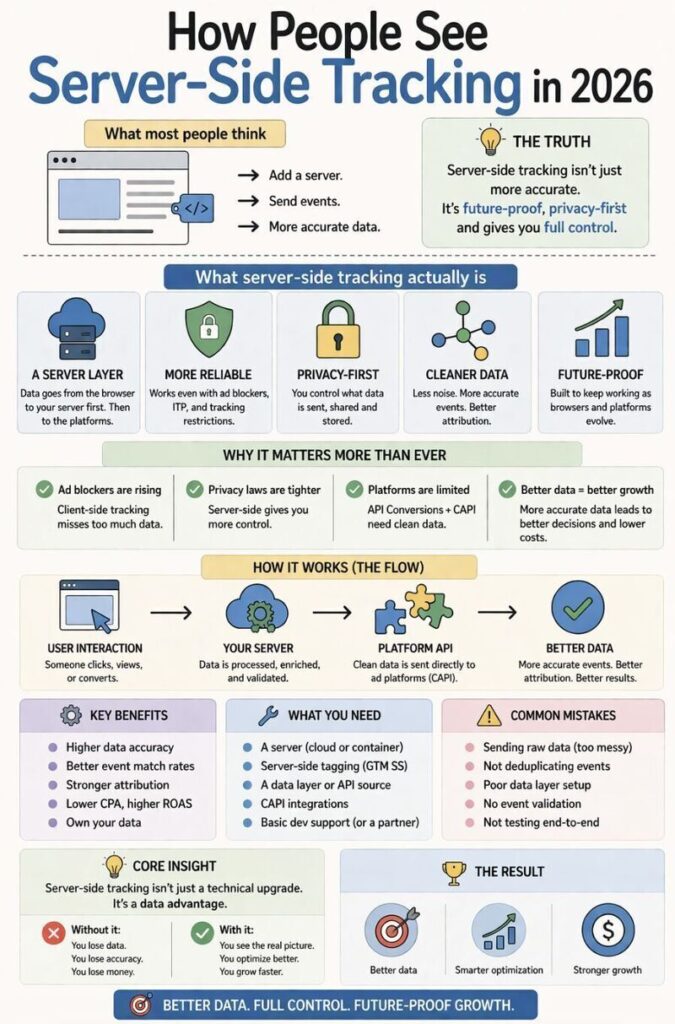
If you’re still relying only on browser pixels in 2026… You’re probably losing conversions. Missing data = confused algorithms = wasted ad spend. Server-side tracking can fix that. Instead of depending on the user’s browser, you send clean, verified conversion data directly from your server to Google and Meta. ✅ Higher match rates✅ More accurate

Your Google Ads Algorithm is Bidding On Blind Data Read More »

Meta ROAS is often inflated

Here’s why most Meta accounts aren’t actually optimizing for profit ↓ “Performance” in Meta usually means revenue. But revenue ≠ profit. That disconnect is where growth stalls. This is the real Meta Ads problem, in sequence: Tracking misses conversions Browser restrictions and blockers create blind spots. Your algorithm optimizes on incomplete data. Algorithms optimize for

Meta ROAS is often inflated Read More »

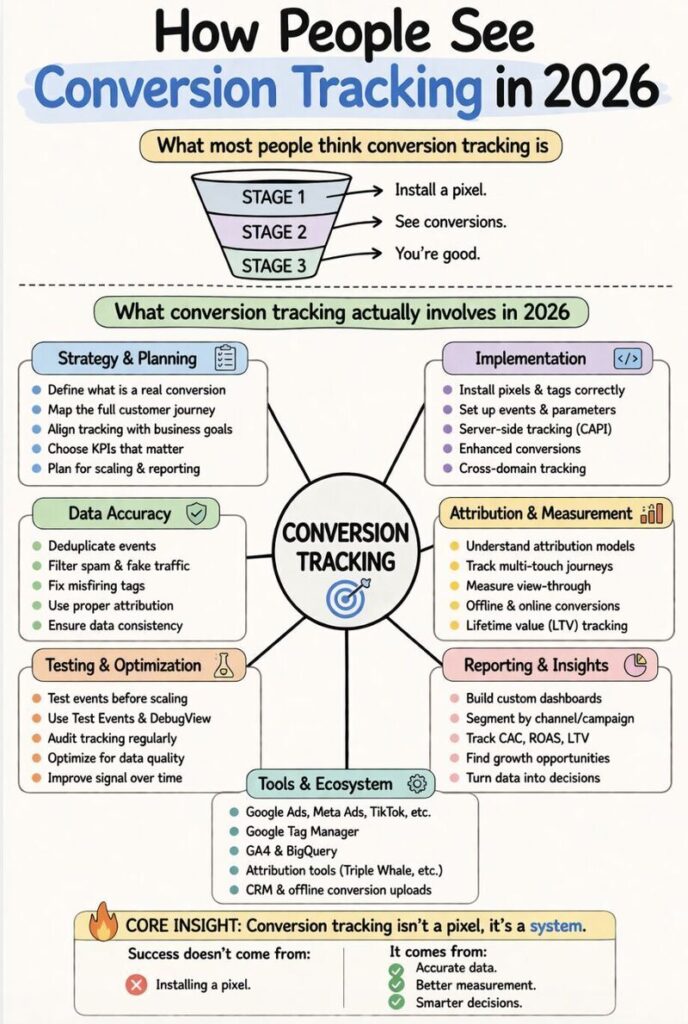
Most people think conversion tracking is simple

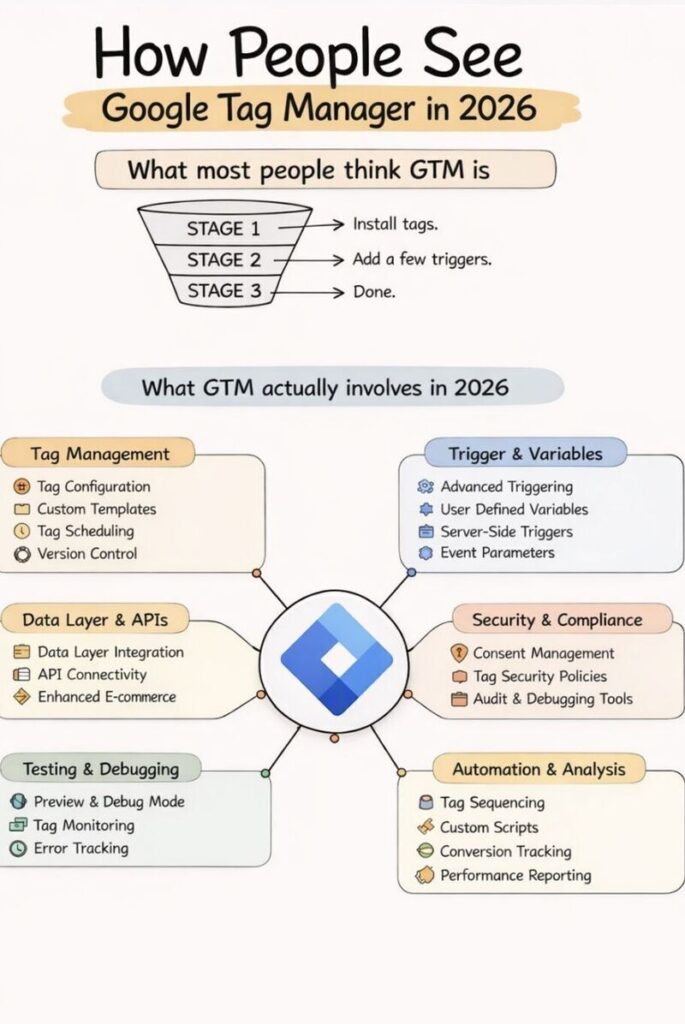
Install a pixel → see conversions → done. Reality in 2026? It’s a full system. Conversion tracking today involves: • Defining what actually counts as a conversion• Mapping the full customer journey• Setting up server-side tracking (CAPI)• Fixing data quality issues• Understanding attribution (not just last click)• Connecting online + offline data• Turning data into

Most people think conversion tracking is simple Read More »

How People See Google Ads for Small Budgets in 2026

What most people think Google Ads is – Create ad– Get clicks– Make sales What Google Ads for Small Budgets actually involves in 2026 💰 Smart Budgeting – Start small ($5–$20/day)– Focus on ROI (not just traffic)– Track micro conversions (form start, call click, add-to-cart)– Set daily budget limits 🔎 Targeted Campaigns (Focus on Search)

How People See Google Ads for Small Budgets in 2026 Read More »

Smarter Optimalization Approach

Stop Optimizing Campaigns in Isolation Start Thinking in Portfolios Many advertisers still manage campaigns individually… But smart growth comes from using Portfolio Bid Strategies. When campaigns share data, automation becomes stronger, learning becomes faster, and performance becomes more stable. Here’s why portfolio bidding matters: ✅ Combines data across campaigns → Stronger signals & faster optimization✅

Smarter Optimalization Approach Read More »

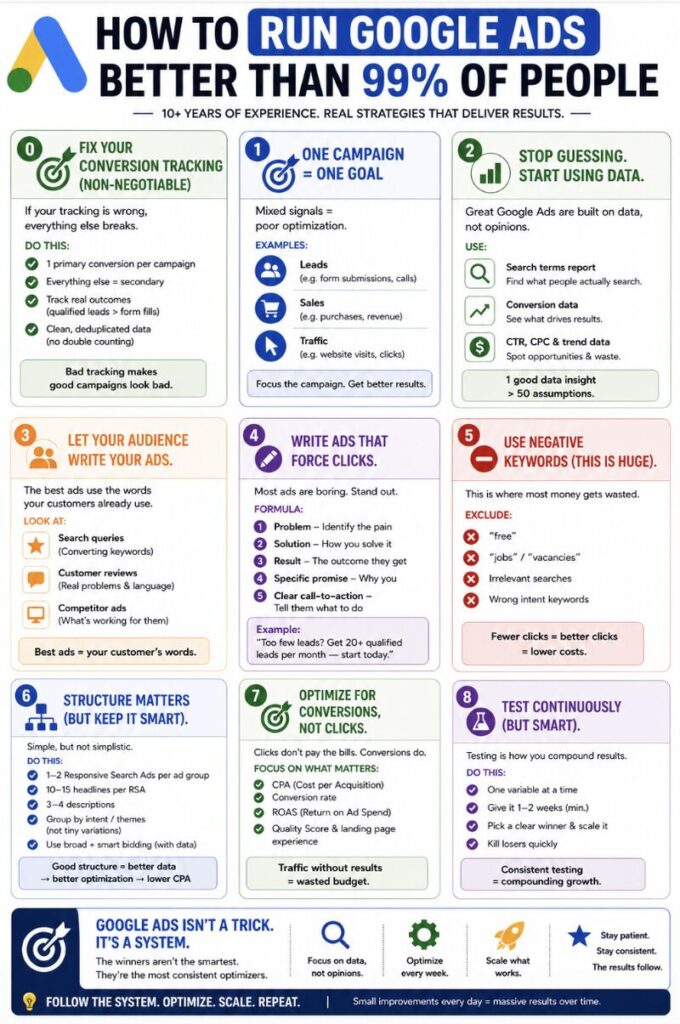
How to run Google Ads better than 99% of people

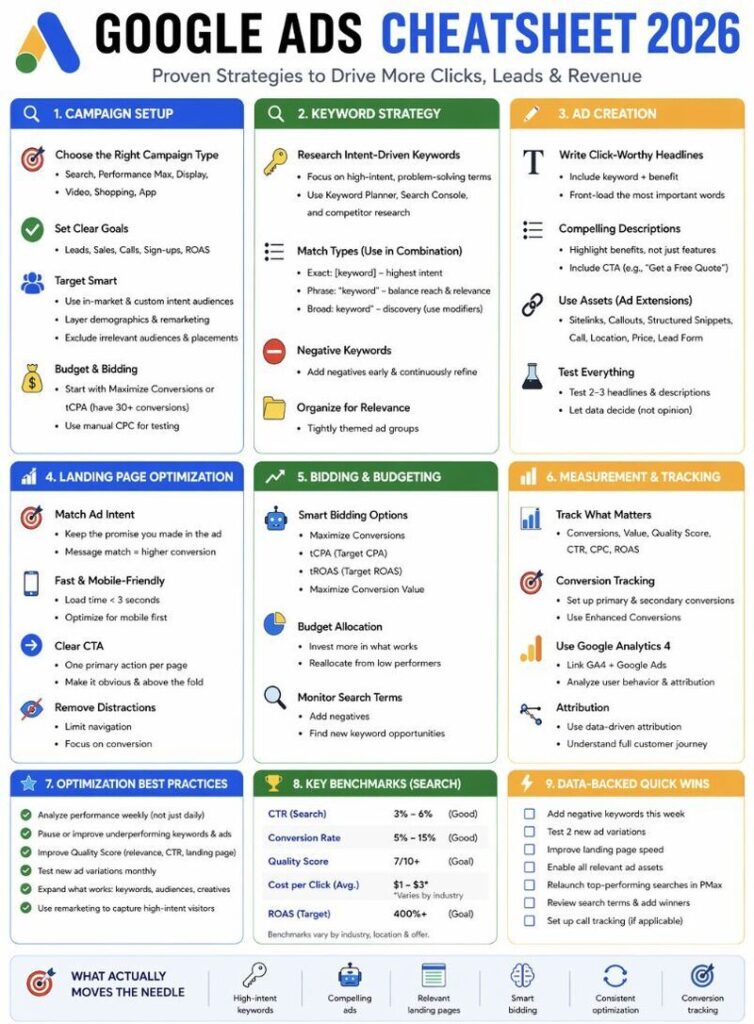
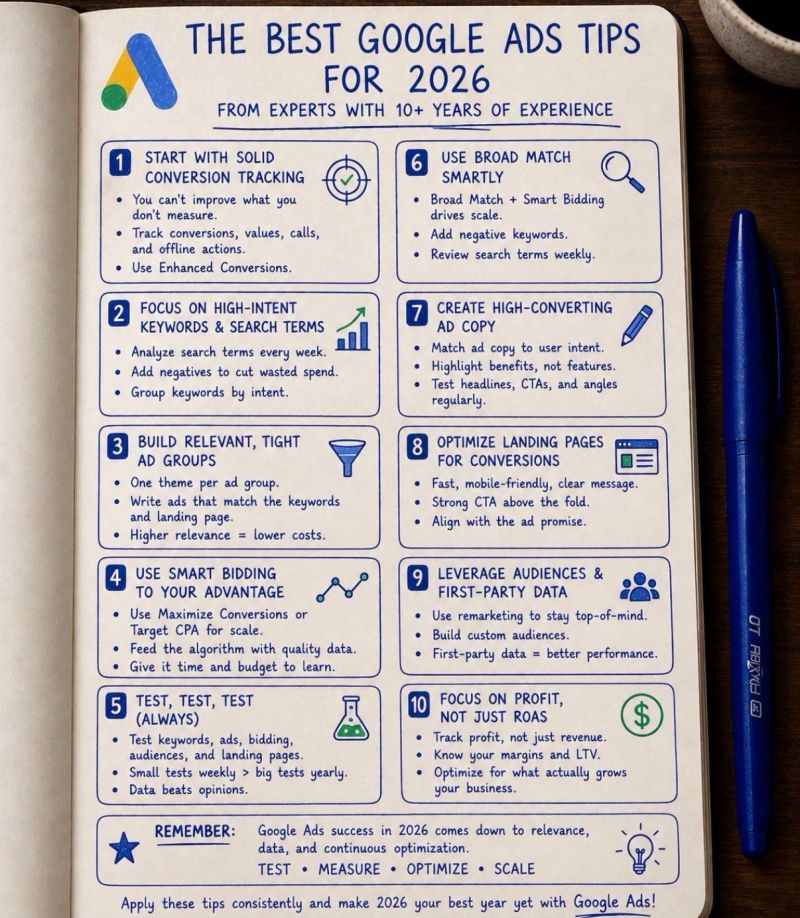
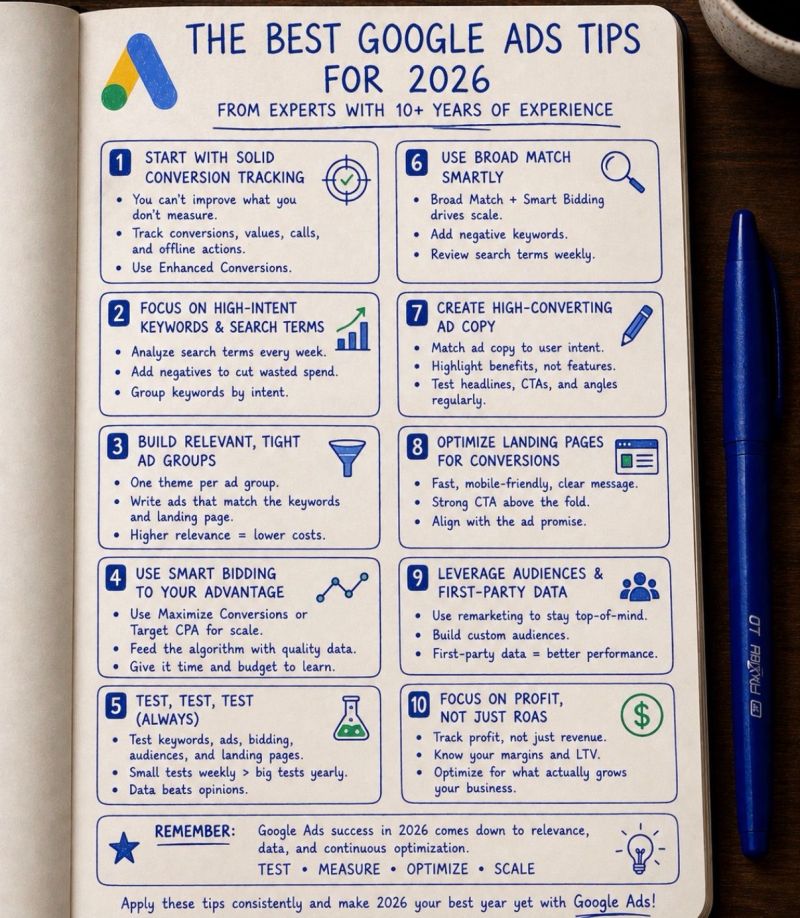
After 10+ years managing campaigns, one thing is clear: Most accounts don’t fail because of budget. They fail because of bad tracking, mixed signals, and weak structure. Fix these 9 things, and performance changes fast: 0. Fix your conversion tracking (non-negotiable) If your tracking is wrong, everything else breaks. → 1 primary conversion per campaign→

How to run Google Ads better than 99% of people Read More »

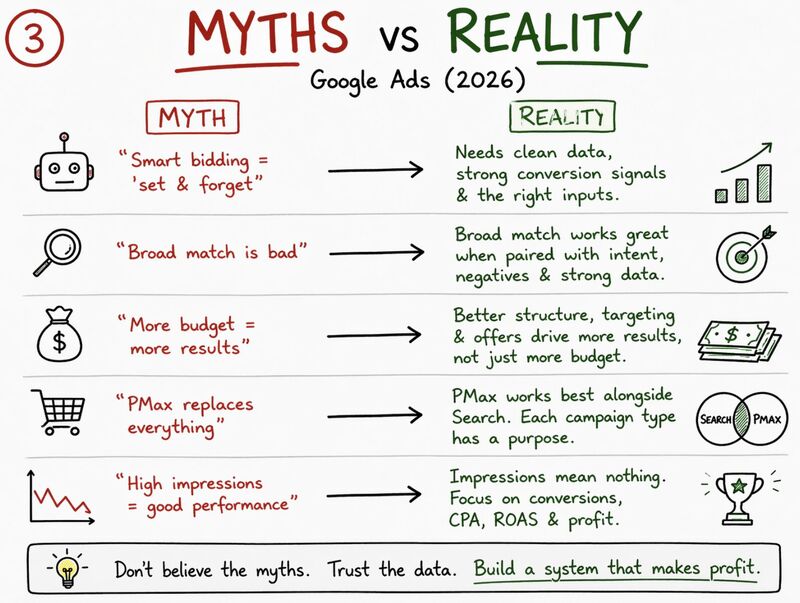
Myths vs Reality

Most Google Ads accounts don’t fail because of the platform. They fail because of bad assumptions. Here are a few I still see in 2026: → “Smart bidding = set & forget”→ “Broad match doesn’t work”→ “More budget = more results”→ “PMax replaces everything”→ “High impressions = good performance” All of these sound logical. All

Myths vs Reality Read More »

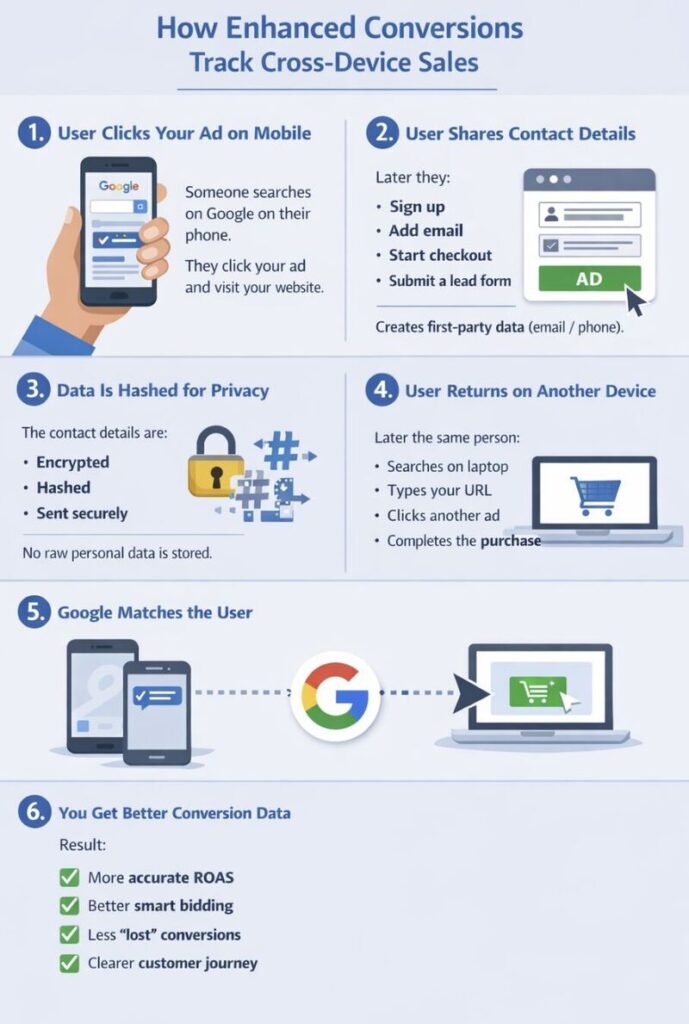
How Enhanced Conversions Track Cross-Device Sales

1. User Clicks Your Ad on Mobile Someone searches on Google using their phone.They click your ad and visit your website. 2. User Shares Contact Details Later they may:Sign upEnter their emailStart checkoutSubmit a lead formThis creates first-party data (like email or phone number). 3. Data Is Hashed for Privacy The contact details are:EncryptedHashedSent securelyNo

How Enhanced Conversions Track Cross-Device Sales Read More »

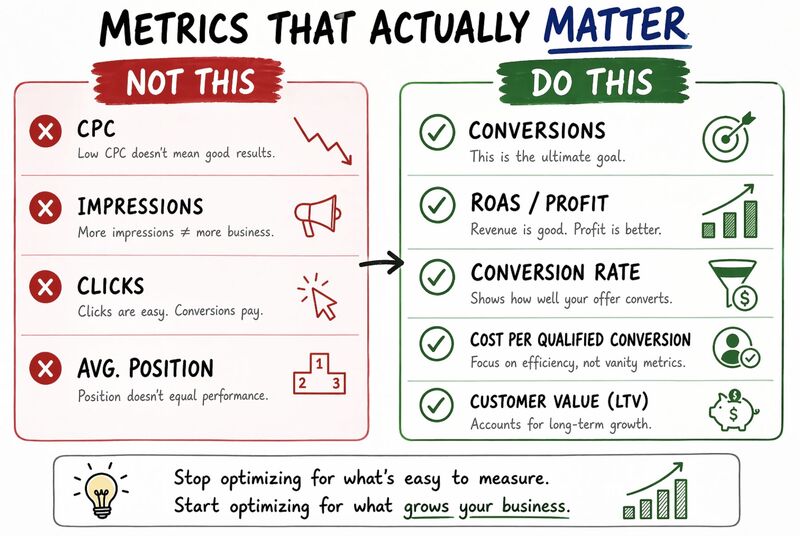
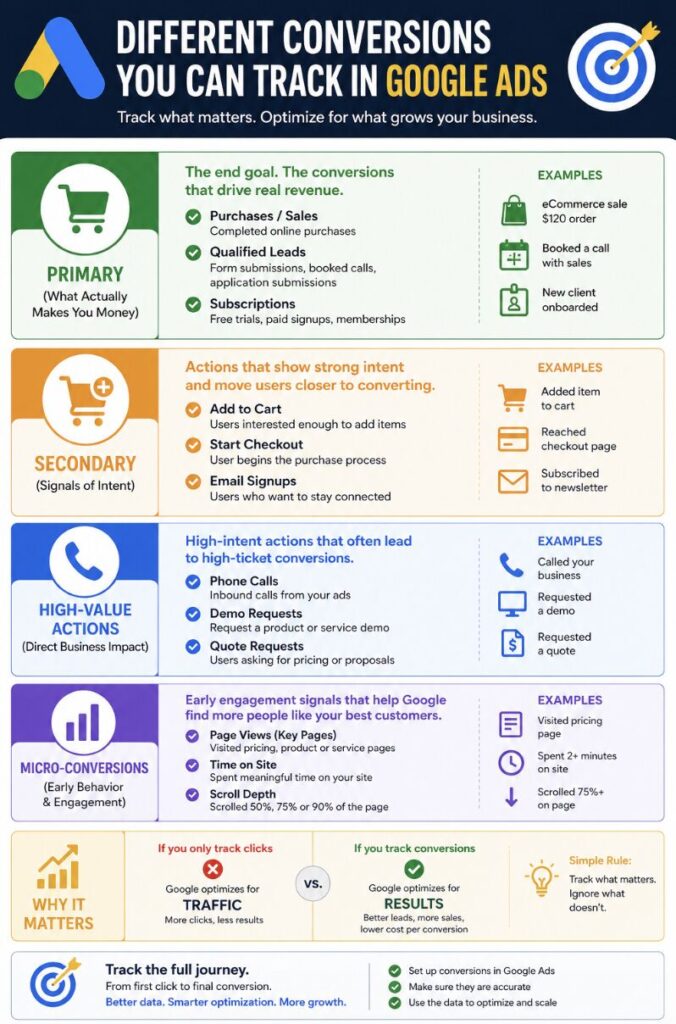
Most people think Google Ads = clicks

That’s the fastest way to waste money. Because clicks don’t pay your bills. 👉 Conversions do. Here are the different conversions you should be tracking: 🎯 Primary (what actually makes you money)• Purchases• Qualified leads (forms, booked calls)• Subscriptions ⚙️ Secondary (signals of intent)• Add to cart• Start checkout• Email signups 📞 High-value actions• Phone

Most people think Google Ads = clicks Read More »

Update to the tagging system

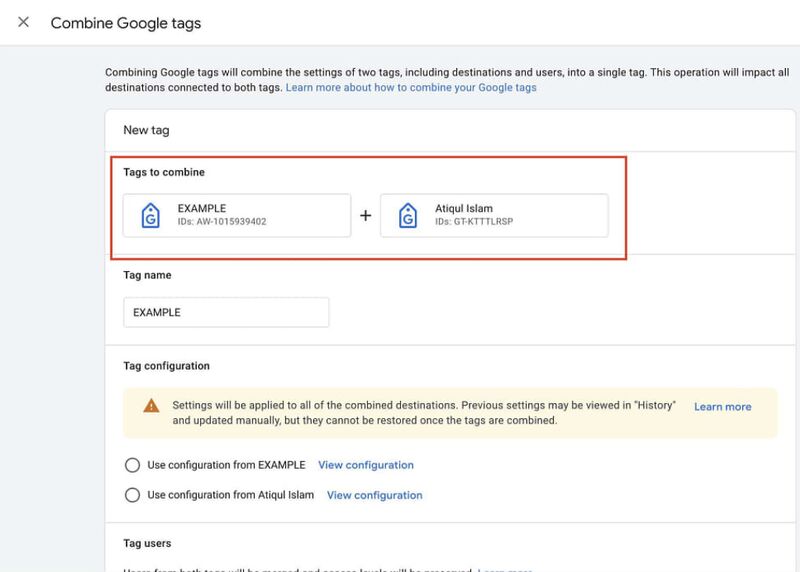
Google is phasing out the old “AW-XXXXXXXX” tag format and replacing it with a unified “GT-XXXXXXXX” tagging system across platforms like Google Ads, GA4, and Floodlight. The goal is to standardize tracking across Google’s ecosystem, which should: – Reduce tag conflicts– Improve data flow between platforms– Deliver more consistent attribution and reporting This also introduces

Update to the tagging system Read More »

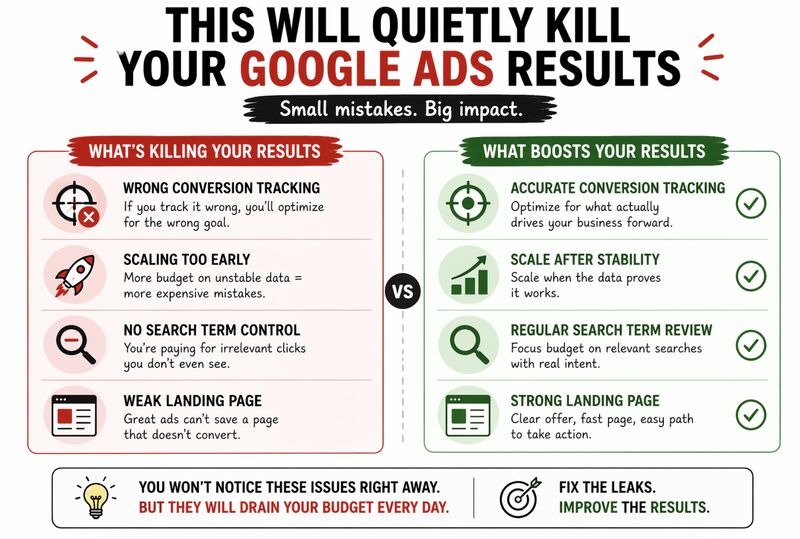
Some Google Ads problems don’t look like problems.

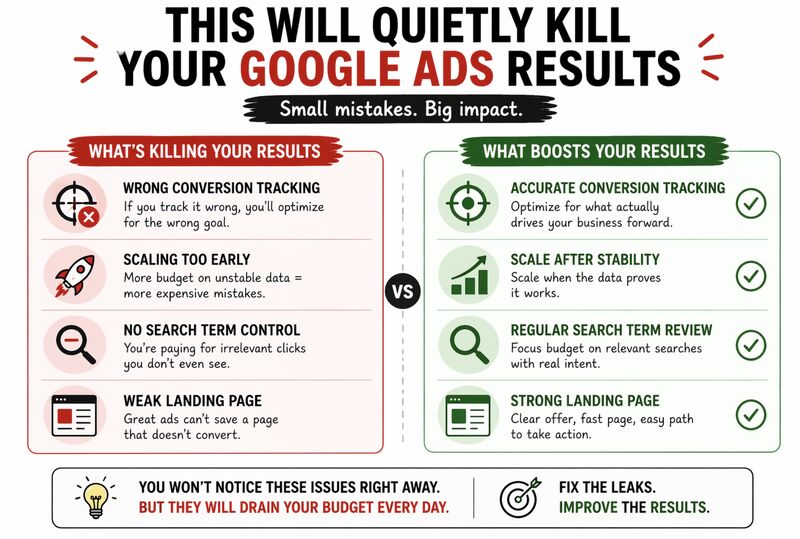
They don’t break your account overnight. They don’t trigger warnings. They just slowly drain your budget. Things like: → Slightly wrong conversion tracking→ Scaling before data is stable→ Paying for irrelevant search terms→ Sending traffic to a weak landing page Individually? Easy to ignore. Together? Expensive. Now flip it: → Accurate tracking→ Scaling after proof→

Some Google Ads problems don’t look like problems. Read More »

This Will Quietly Kill Your Google Ads Results

Some Google Ads problems don’t look like problems. They don’t break your account overnight. They don’t trigger warnings. They just slowly drain your budget. Things like: → Slightly wrong conversion tracking→ Scaling before data is stable→ Paying for irrelevant search terms→ Sending traffic to a weak landing page Individually? Easy to ignore. Together? Expensive. Now

This Will Quietly Kill Your Google Ads Results Read More »