Google Ads News
Merchant API

Merchant API migration reminder from VIVEK GUPTA!
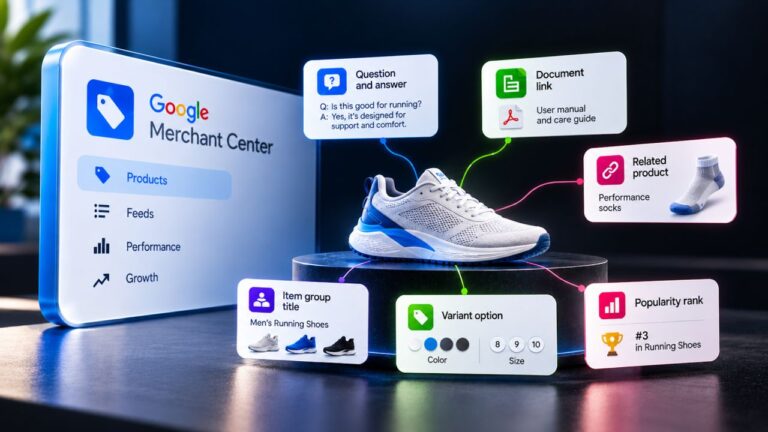
Expanded attributes

Vojtěch Audy & Hana Kobzová discovered that Merchant Center has expanded attribute rules to automatically find products!
Data Retention Policy

From Tuesday, Google Ads will implement the new data retention policy!
1st order price

Sachin Patel & Barry Schwartz discovered that Google is again testing 1st order price!
Check out

Google expanded Checkout Links to Demand Gen campaigns, letting advertisers send shoppers directly from an ad to a checkout page for a faster purchase experience.
Key points:Checkout Links are now available in Argentina, Canada, France, Germany, Great Britain, India, Indonesia, Israel, Japan, Mexico, Poland, and the United States.
The feature now works across YouTube Shorts and in-feed ads within Demand Gen campaigns.
Google says advertisers using checkout links have seen an average +6% conversion uplift.
The goal is to reduce friction between product discovery and purchase, especially for mobile shoppers.Thanks for sharing Hana Kobzová.
Google’s Ads DevCast Episode 6 breaks down Meridian, Google’s open-source Marketing Mix Modeling framework

Meridian helps advertisers understand the true impact of marketing spend across channels by separating incremental lift from baseline sales. Instead of looking only at click-level attribution, it uses aggregated historical data across digital, TV, print, seasonality, economic factors, and other signals to support strategic budget decisions.
A few key concepts covered:• Hill curves: show diminishing returns and where a channel still has room to scale
• Adstock: models the delayed and decaying impact of ads over time
• MMM: supports macro-level budget planning alongside GA4 attribution and incrementality experiments
The episode also highlights new Meridian releases from GML 2026:
• Meridian in GA360: turnkey MMM inside Google Analytics 360
• Meridian Studio: a Google Cloud platform for building and scaling MMM with agentic AI support
• Meridian GeoX: open-source geo-based incrementality testing to calibrate models with real-world causal data
The takeaway: Meridian is becoming a more accessible way for marketing teams to move from “what happened?” to “what actually drove growth?”
Thanks for sharing Arpan Banerjee
Offline conversion

Google’s Data Manager API just got two important updates:Offline conversion event uploads now support Google Marketing Platform destinations, including Campaign Manager 360, Search Ads 360, and Display & Video 360.
Google Ads Customer Match uploads can now include IP addresses through the new CompositeData field, either on their own or alongside identifiers like email, phone, and address data.
For teams still using the Campaign Manager 360 API for conversion uploads, this is a good moment to review the upgrade path.
The Data Manager API offers a unified schema across Google advertising products, encrypted user identifiers, and the ability to route events to multiple destinations in a single request.
Google also recommends moving toward composite_data for user identifiers so integrations are ready for future Customer Match improvements, including higher match rates expected from Q3 2026.
Thanks for sharing Arpan Banerjee
Google is tightening its gambling ads policy in Ireland

From July 1, 2026, online gambling operators advertising in the Republic of Ireland will need to be licensed by the Gambling Regulatory Authority of Ireland.
And there is an important deadline after that:By September 1, 2026, advertisers need to reapply for Google Ads certification using their GRAI-issued license.If they do not, their certification can be revoked.
This is one of those updates that may look small, but can have a big operational impact for gambling advertisers.
Because it is not just a policy change. It is a certification and compliance workflow change.
For advertisers in this space, the key questions are:
→ Do we have the correct GRAI license?
→ Does our Google Ads certification need to be updated?
→ Who owns the re-application process internally?
→ Are all Ireland campaigns mapped to the right legal entity?
→ What happens to active campaigns if certification is not renewed in time?
The deadline is not tomorrow.
But in regulated verticals, waiting until the last moment is usually where problems start.
Worth putting this one on the compliance calendar now.
Demand Gen is now part of Google’s Commerce Media Suite

That is a pretty interesting move.Brands can now use retailer first-party data to reach high-intent shoppers across YouTube, Discover, and Gmail.
In other words:Retail media targeting is moving deeper into Google’s upper- and mid-funnel inventory.
And that could be a big deal.
Because the opportunity here is not just “more reach.”It is better reach.
→ Retailer first-party data→ Google AI optimization
→ Demand Gen inventory
→ Shared reporting between brands and retailers
→ More visibility from discovery to purchase
For brands, this could make Demand Gen a lot more useful in retail media plans.
For retailers, it creates another way to monetize first-party data beyond the usual sponsored product or onsite inventory.
The real question is how clean the measurement will be.
Because if the targeting is strong, the creative is relevant, and the reporting connects discovery to purchase properly…Then Demand Gen inside Commerce Media Suite could become a serious retail media play in 2026.
Thanks for sharing Hana Kobzová.
Brand exclusions in AI Max?

That’s the kind of feature that can turn “scary automation” into something advertisers might actually test.
AI Max seems to have some pretty neat brand inclusion and exclusion features for search terms.Not bad. Not bad at all.
Credit to Joey Bidner for pointing this one out.Because the biggest concern with AI-driven Search campaigns is not just that Google can find more queries.
It is whether advertisers can stop it from going after the wrong ones.Brand exclusions could be especially useful for separating:
→ own brand vs non-brand traffic
→ competitor terms vs generic expansion→ incremental demand vs traffic you likely would have captured anyway
→ useful query expansion vs polluted search termsThat matters.
Because automation without control is hard to trust.But automation with better guardrails? That becomes much more interesting.
Of course, the real test is whether this works reliably in practice.But as a direction, this is a good one.
Google Ads just got closer to becoming your CRM

Google Ads now includes a centralized lead management interface for Google-hosted form leads, helping advertisers manage, qualify, and act on leads without leaving the platform.
The new dashboard gives teams a quick view of:
New leads
Qualified leads
Lead status
Lost leads
Conversion rates
It also includes a lead table with contact details and sales stages, making it easier to track prospects through the funnel.
The biggest advantage is that advertisers can now sync lead quality signals with Google AI. That means bidding strategies can optimize around high-value conversions, not just raw lead volume.
Why it matters
Centralized lead management
Keep form leads in one place and reduce the risk of missed opportunities.
Smarter AI optimization Feed quality signals back into Google Ads to improve bidding decisions.
Faster sales follow-up
Prioritize the leads most likely to convert.
Simpler workflow
Use a lightweight, built-in CRM-style experience directly inside Google Ads.
Overall, this update helps advertisers move beyond collecting leads and toward managing lead quality, sales velocity, and conversion outcomes more efficiently.
Thanks for sharing Hana Kobzová
Google is rolling out Real-Time Policy Reviews to speed up ad approvals inside Google Ads

The feature is currently available for Responsive Search Ads and will expand to more campaign types later this year.
Instead of waiting for a separate review after submitting an ad, advertisers now get policy feedback while creating the ad. During ad creation, Google checks for editable issues like typos, capitalization problems, formatting errors, or destination issues.
Once the ad is saved, Google provides an immediate policy decision. Ads without issues can start serving almost instantly, while ads with more complex violations are sent to a post-save review page with details and next steps.
The update should help reduce campaign launch delays, especially for time-sensitive promotions, product launches, and reactive campaigns. It also means advertisers may need to catch compliance issues earlier in the creative workflow.
Google Ads API reach metrics will move to a Total Co-view definition starting June 2, 2026

This means video reach reporting will count all individuals who viewed an ad on connected TV devices, including cases where multiple people are watching YouTube together on the same TV screen.
The change affects campaign-level reach metrics such as unique users, average impression frequency per user, and frequency-based unique user metrics for 2+, 3+, 4+, 5+, and 10+ exposures.
No API migration or code changes are required, since this is a reporting definition change that will be applied automatically.
Advertisers and developers should expect possible changes in reach and frequency values from the launch date onward, and should update internal dashboards or documentation to reflect the new measurement methodology.
Thanks for sharing Arpan Banerjee
Conversions

Juozas Kaziukėnas discovered that the objective conversions is now live in ChatGPT Ads!
Display & Video 360 API will begin supporting Demand Gen resources starting June 10, 2026.

The rollout will happen gradually over two weeks and should be available to all Display & Video 360 partners by June 24, 2026
.The update adds support for managing and retrieving Demand Gen line items, ad groups, and ads through the API.
These resources will also begin appearing in advertisers.lineItems.list and advertisers.adGroups.list responses once rolled out to each partner.
Developers using those list methods should update their integrations by June 10, 2026 to ensure they can handle the new Demand Gen resources in API responses.
After the rollout is complete, partners will be able to retrieve, create, delete, and update Demand Gen resources through the Display & Video 360 API.
Thanks for sharing Arpan Banerjee.
Google Merchant Center’s Terms of Service are changing on June 15, 2026

By continuing to use Merchant Center after that date, users agree to the updated terms.
The updates include clearer rules for product content submission, added terms for future data processing across products and services, and details on how Google may use publicly available emails to help merchants reach customers.
Thanks for sharing Arpan Banerjee
Reminder

Google Ads sent a quarterly reminder that advertisers’ use of Google Ads is subject to Google’s Terms and Privacy Policy.
The email also reminds advertisers to comply with applicable laws, including India’s Information Technology rules.
It warns that generating, modifying, or publishing unlawful synthetic content such as deepfakes or non-consensual intimate imagery is prohibited.
Violations may lead to warnings, content removal, loss of access, account termination, and in some cases may be reported to authorities.
Thanks for sharing Arpan Banerjee
Ads Update

Beginning on June 1, 2026, hourly, daily and weekly reporting data collected by Google Ads for periods of time shorter than one month will be available for 37 months.
Monthly, quarterly and annual data is available for 11 years. After that period, the data will not be accessible via the Google Ads interface or APIs.
Exception(s):
Reach and frequency metrics will be available for 3 years only, after that period, the data will not be accessible via the Google Ads interface or APIs.
They include:Unique usersAvg impr. freq. /userAvg impr. freq. /user (7d)Avg impr. freq. /user (30d)Frequency distribution 1+. 2+, 3+, 4+, 5+, 10+
𝐆𝐨𝐨𝐠𝐥𝐞’𝐬 𝐀𝐈 𝐬𝐡𝐨𝐩𝐩𝐢𝐧𝐠 𝐢𝐧𝐬𝐢𝐠𝐡𝐭𝐬 𝐫𝐞𝐩𝐨𝐫𝐭 𝐢𝐬 𝐫𝐨𝐥𝐥𝐢𝐧𝐠 𝐨𝐮𝐭 𝐔𝐒, 𝐂𝐚𝐧𝐚𝐝𝐚, 𝐀𝐮𝐬𝐭𝐫𝐚𝐥𝐢𝐚, 𝐈𝐧𝐝𝐢𝐚, 𝐍𝐙 𝐟𝐢𝐫𝐬𝐭

S𝐡𝐚𝐫𝐞 𝐨𝐟 𝐯𝐨𝐢𝐜𝐞 𝐨𝐧 𝐀𝐈 𝐬𝐮𝐫𝐟𝐚𝐜𝐞𝐬 see how your brand stacks up vs similar brands across AI Mode, AI Overviews, and Gemini
𝐒𝐡𝐨𝐩𝐩𝐢𝐧𝐠 𝐟𝐮𝐧𝐧𝐞𝐥 𝐛𝐫𝐞𝐚𝐤𝐝𝐨𝐰𝐧 discovery, evaluation, and purchase stage insights all in one place
𝐏𝐫𝐨𝐝𝐮𝐜𝐭 𝐭𝐞𝐫𝐦 𝐢𝐧𝐬𝐢𝐠𝐡𝐭𝐬 find out which terms shoppers are searching in AI conversations and your share of voice for each
𝐀𝐭𝐭𝐫𝐢𝐛𝐮𝐭𝐞 𝐜𝐨𝐦𝐩𝐥𝐞𝐭𝐞𝐧𝐞𝐬𝐬 𝐬𝐜𝐨𝐫𝐞 spot exactly which products are missing the specs AI surfaces are looking for
𝐑𝐨𝐥𝐥𝐢𝐧𝐠 𝐨𝐮𝐭 𝐭𝐨 US, Canada, Australia, India, and New Zealand in the coming months
Source/credit: Arpan Banerjee.
Google just gave advertisers a smarter way to grow

New Customer Acquisition modes let you choose exactly who you want to reach and how aggressively you go after them.
Three modes, three strategies:
New Customer Value Mode — You still reach everyone, but bid higher for first-time buyers. Result? Up to +9% ROAS improvement for advertisers who valued new customers at 2x their AOV.
New Customer Only Mode — 100% of your budget goes toward people who’ve never bought from you. Brands using this saw a +11.5% improvement in the new customer ratio and a -3% reduction in acquisition costs.
New Prospects Mode (new for 2026) — The most aggressive option yet. This targets brand-unaware users, people who’ve never searched for you, visited your site, or engaged with your content.
Automated exclusions handle the filtering so your spend only reaches truly cold audiences.If you’re hitting a growth ceiling with your existing customer base, these tools are worth testing.
BIG GTM CHANGE

Google is rolling out major updates to Google Tag and Google Tag Manager aimed at simplifying tagging, improving performance, and unifying the measurement experience across Google products.
Key highlights:
• Google tags will evolve into fully capable GTM containers• New streamlined GTM interface with centralized Settings and Advanced sections• Faster performance by removing dependency on extra gtag.js loading• Easier collaboration and permissions management across Google products
• New visual tagging capabilities to create events and conversions without manual coding• Unified deployment snippets and improved debugging/version control
Big takeaway: Google is making tagging more accessible for marketers while giving technical teams cleaner architecture and better governance.
This is a significant step toward a more no-code, unified measurement ecosystem.
Thanks for sharing Simo Ahava
Big Ad Credit

Biggest Ad credit offer I have seen! Thanks for sharing Roger Cooney.
Maps placement

More people are now seeing the maps placement! Thanks for sharing Aleksejus Podpruginas.
Display Ads are evolving to Demand Gen

Google just made it official:Google Display Ads are moving into Demand Gen campaigns.
That’s a massive signal about where advertising is headed.Instead of managing traditional display separately, advertisers will now run campaigns across:
• YouTube
• Discover
• Gmail
• Google Maps
• the Google Display Network (2M+ sites/apps)All inside one AI-powered, intent-driven system.
Why this matters 👇
The old display model was built around: → impressions → placements → static bannersThe new model is built around: → discovery → audience intent → multi-surface engagement → AI optimization.
New test

Google is testing a new hover animation in Shopping ads that slightly enlarges the ad section when users hover over it.
The update appears designed to make Shopping ads more interactive and visually engaging, helping products stand out more in search results and potentially increasing user engagement with shopping campaigns.
The change was spotted and shared by Sachin Patel on May 25, 2026.
AI Ads

Google’s new AI Mode ad formats announced at GML 2026 are already starting to appear live.
Spotted by Sachin Patel en shared by Hana Kobzová, the new placements include:
• Retailer availability ads directly inside AI Mode results
• “Highlighted Answers” sponsored placements within AI-generated recommendationsEarly examples feature the Apple MacBook Air and Microsoft Surface Laptop Copilot+ PC.
This is a major signal that Google is rapidly monetizing conversational search and integrating ads deeper into the AI experience.
For you label

Google is testing a new “For you” label. It shows in the right panel under the Sponsored section. Spotted by Brodie Clark, Barry Schwartz & Hana Kobzová.
Travel Ads

Looks like Travel promotion ads are now live 👀 by Thomas Eccel!