Google Ads News
LSA Problem

Google Local Service Ads can be very expensive, sometimes costing hundreds of dollars per call or click. Normally, Google refunds advertisers for mistaken or invalid leads.
However, marketing expert Anthony Higman reported a case where Google charged his client $400 for a call from an existing customer who clicked the LSA ad.
Even after confirming the caller was not a new lead, Google refused to refund the charge despite multiple escalations.
Confirm Political

Arpan Banerjee just got the mail that you need to confirm whether or not your campaigns have European Union political ads | Deadline March 31, 2026!
OpenAI is exploring the next step in monetizing ChatGPT

According to reports, OpenAI has held early talks with The Trade Desk about helping sell ads on the ChatGPT platform.
The discussions suggest OpenAI may initially rely on established ad-tech partners to scale advertising across ChatGPT’s free and lower-priced tiers.
At the same time, the company reportedly plans to develop its own advertising technology in the long term.
OpenAI hits pause on in-chat shopping

OpenAI is reportedly moving e-commerce checkout out of ChatGPT and into external apps instead.
The feature launched last year allowed users to buy directly from merchants like Etsy and Shopify without leaving the chat.
Now the plan is to shift “Instant Checkout” to the Apps ecosystem, likely to reduce complexity around:
– real-time pricing & inventory updates
– fraud prevention
– merchant integrations
The move suggests AI-native shopping is still early, and scaling it safely is harder than expected.
Target only audiences

Anthony Higman discovered this unusual recommendation to target only audiences!
Customer match

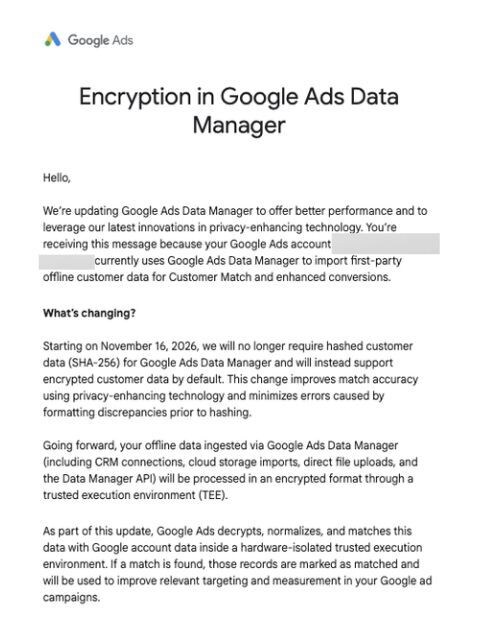
Thanks to Arpan Banerjee for sharing this update with me! Google Ads has announced upcoming changes to Customer Match uploads in the Google Ads API.
Starting April 1, 2026, developers will need to use the Data Manager API instead of the Google Ads API for uploading Customer Match data.
Good reminder for teams working with Customer Match integrations to review their implementation and plan the transition early to avoid disruptions.Appreciate you flagging this, Arpan!
BIG META UPDATE

Meta is updating its ad measurement to better reflect how people interact with ads on social media and to align reporting with third-party analytics tools.
Main changes:
Click-through attribution will now count only link clicks for website and in-store conversions, improving consistency with tools like Google Analytics.
Conversions from actions like likes, shares, and saves will move to a new category called engage-through attribution (formerly engaged-view attribution).
For video ads, an engaged view is now defined as 5 seconds instead of 10 seconds, reflecting faster user behavior.
Meta is also partnering with analytics platforms like Northbeam and Triple Whale to include both views and clicks in attribution models.
Overall: These changes aim to make ad performance reporting clearer while still capturing the value of social interactions.
Subscription Policy

Physical goods subscriptions policy will be updated to formally include alcohol (for example, Wine Clubs) for eligible merchants in the United States.
Google now strongly recommends 1500 × 1500 images for product feeds

A new, prominently placed notice on the Merchant Center “image_link” help page advises advertisers to use images near or above 1500 × 1500 pixels to ensure best performance across all listing formats including ads and free listings.
The recommendation appears at the very top of the page, highlighted to draw attention.
Why it matters: Higher-resolution images can improve visibility, eligibility across placements, and overall engagement. Smaller creatives may limit performance as formats continue to evolve.
If you’re running Shopping ads or free listings, it may be time to audit your product feed and upgrade lower-resolution images.Spotted by Hana Kobzová.
UCP

Google just published new guidance on its Universal Commerce Protocol (UCP) and how it enables AI-driven, on-Google checkout.
Key takeaway for merchants: UCP can power a native “Buy” button on Google surfaces, while you remain the seller of record.
To participate, you’ll need the native_commerce attribute in Merchant Center.Payments use stored Google Wallet credentials, and your payment processor must support Google Pay tokens. Why it matters: less checkout friction in experiences like Gemini and AI Mode, and a clearer operational playbook for implementation.
Thanks for sharing Hana Kobzová
Google is testing a new label in Search: “Sponsored options in the area.”

The new sponsored section is appearing in certain local queries and highlights nearby businesses under a clearly marked sponsored header.
In one example, law firms were shown with an image carousel directly within the sponsored block.The update was first spotted by Anthony Higman and later shared by Barry Schwartz.
Why it matters: This further blends paid placements into the local discovery experience, potentially increasing visibility for advertisers targeting high-intent, location-based searches.
Google expands recurring billing for certified U.S. online pharmacies

Certified merchants can now promote:
• Prescription drug subscriptions
• Prescription drug bundles (drug must be the primary product)
• Recurring prescription consultation services
To qualify, pharmacies must maintain certification, submit subscription pricing via the [subscription_cost] attribute in Merchant Center, clearly display terms and fees, and comply with Healthcare & Medicine and recurring billing policies.
Why it matters: This unlocks subscription-based revenue opportunities while staying compliant with Google’s advertising rules.
VRC

VRC Non-Skip ads are now globally available in Google Ads unlocking AI-optimized, non-skippable reach on YouTube CTV screens.
Google is rolling out VRC (Video Reach Campaign) Non-Skips, expanding how brands connect with audiences watching YouTube on connected TVs.
What’s happening
VRC Non-Skips are now live globally in Google Ads and Display & Video 360. The format is purpose-built for the living room experience, ensuring ads run as non-skippable placements optimized specifically for CTV screens.
Why this matters
YouTube has been the No. 1 streaming platform in the U.S. for three consecutive years. The TV screen is now prime real estate for brand budgets. With guaranteed, non-skippable delivery, advertisers can ensure their full message is seen in premium, lean-back environments.
AI in the mix
Google AI dynamically optimizes across:
• 6-second bumper ads
• 15-second standard spots
• 30-second CTV-only non-skippable formats
Instead of manually splitting budgets by format, brands can rely on AI to allocate impressions for maximum reach and efficiency.
Advertising just entered the AI conversation

Criteo is now the first ad tech partner integrating with OpenAI’s advertising pilot in ChatGPT (Free and Go, U.S.).This is a structural shift.
For years, digital advertising has lived in search results, social feeds, and display inventory. Now it’s moving into conversational interfaces where users are asking high-intent, decision-driven questions.
Data from 500 U.S. retailers shows that traffic referred from LLM platforms converts at 1.5x the rate of other referral channels.
That matters.When discovery happens inside AI, the funnel compresses. Consideration becomes contextual. Intent becomes explicit. And performance marketing enters a new surface.
Criteo managing over $4B in annual media spend integrating into this pilot signals something bigger:
– Commerce media is expanding into conversational AI
– Retail and brand demand generation is evolving
– LLM platforms are becoming performance channels.
Update Other Restricted Businesses: Government Documents and Services

Google will update its “Other Restricted Businesses: Government Documents and Services” policy on March 17, 2026.
Advertisers promoting Business Identifiers and targeting only India will not need to qualify as a government or authorized provider.
However, they must still apply for an exclusion to prevent ad disapproval. Businesses advertising other restricted government documents or services will continue to require appropriate certification under the relevant category.
The updated policy will be enforced starting March 17, 2026.
Thanks to Arpan Banerjee for sharing this update.
Build to order

Google has added a “build to order” availability option in GMC giving vehicle sellers a clearer way to list customizable, factory-order models.
Large AI Max recommendation

Hana Kobzová discovered that A large recommendation card promoting AI Max is now appearing in the Recommendations tab in Google Ads.
AI Voice

Arpan Banerjee received this email about Performance Max getting AI Voice narration!
GML 2026

Google Marketing Live 2026 set for May 20!
200 Off

Thomas Eccel discovered that Google Ads can now show a”𝟐𝟎𝟎$ 𝐎𝐅𝐅” 𝐛𝐚𝐝𝐠𝐞𝐬 𝐨𝐧 𝐒𝐩𝐨𝐧𝐬𝐨𝐫𝐞𝐝 𝐒𝐡𝐨𝐩𝐩𝐢𝐧𝐠 𝐋𝐢𝐬𝐭𝐢𝐧𝐠𝐬.
Google Shopping Ends UK Pharmacy Targeting for Germany & Austria

Starting March 2026, Google will update its Shopping Healthcare and Medicines Policy, ending the cross-border certification program that currently allows UK-based online pharmacies to advertise to users in Germany and Austria.
Affected advertisers should review their account settings and targeting to stay compliant.
Google Ads Update: Financial Services Verification in Malaysia

Google will introduce mandatory financial services verification for advertisers targeting Malaysia.Applications open: March 10, 2026
Enforcement begins: April 14, 2026
Advertisers will need to:Get verified by Google’s compliance partner G2Apply for Google Financial Services Verification
This applies to services such as banking, credit and loans, investments, brokerages, and insurance.
Advertisers and agencies managing these campaigns who do not complete verification before April 14, 2026 will no longer be able to run financial services ads in Malaysia.Thanks for sharing Arpan Banerjee.
Brand logo’s

Hester Geerdink just sent me this post from Chris Nightingale that Google is rolling out brand logo’s in shopping!
YouTube topic insights

An open-source YouTube Topic Insights dashboard (built on Google Cloud and powered by the YouTube Data API + Gemini) helps marketers easily identify emerging trends and top creators by turning raw video data into actionable insights.
It’s available on GitHub, and users are invited to suggest other marketing challenges that could benefit from open-source solutions.
Merchant Center for agencies

Google has launched the new Merchant Center for Agencies in the U.S. and Canada!
Big news for Shopify merchants!

Shopify just announced that ChatGPT will soon power agentic storefronts, allowing shoppers to discover products and complete purchases directly inside ChatGPT.
This new sales channel is expected to roll out by default, with merchants able to manage settings from their Shopify Admin.
What this means
New AI-driven discovery channelFrictionless in-chat purchasingPotential boost in reach & conversions
Redesign

Google Ads has now introduced a redesigned Asset Optimization section for Demand Gen campaigns, with a more structured interface. Thanks for sharing Thomas Eccel
Subscription

Starting March 31, 2026, Google will allow certified U.S. online pharmacies to advertise prescription drugs via recurring billing, including subscriptions, bundled treatment plans, and consultation services.
To participate, merchants must maintain certification, clearly disclose fees, submit full subscription pricing in feeds, link to subscription terms, and follow existing healthcare and recurring billing policies.
Previously disapproved accounts can request a new review once compliant.
Wine

Starting March 31, 2026, the physical goods subscriptions policy will be updated to formally include alcohol (for example, Wine Clubs) for eligible merchants in the United States.
More rich media

You might start seeing a notification saying “More rich media available for your Google Ads.”This means Google-owned assets will now be available directly in the platform, including:
• Photos
• Videos
• Icons
• 3D assets
• Text elements.
Instead of sourcing and uploading everything yourself, advertisers will be able to build creatives directly inside Google Ads.
It is another step towards a future where AI, creative production, and campaign setup all happen in one place.Faster testing. More variations. Less friction between idea and launch.
Thanks for sharing Bia Camargo
Linking YouTube

Google now wants to automatically link with YouTube!
Shop

Arpan Banerjee just spitted this net Ads section called sponsored shops!
OpenAI

OpenAI is reportedly testing an Ads Manager with a small group of partners as its ChatGPT advertising pilot begins to take shape.
Early results show that some brands are seeing click-through rates below 1% significantly lower than what advertisers are used to on Google Search.
But this comparison may be premature. Google has spent more than 25 years refining its ad ecosystem, while OpenAI is still in the early stages of building and testing its approach.
What’s clear is that AI platforms are moving from pure product innovation toward monetization experiments. For marketers, this signals a new channel worth watching even if performance benchmarks will take time to mature.
Capture

Arpan Banerjee just sent me that Google support now let’s you capture a screenshot!
Editor 2.12

Google Ads Editor version 2.12 is rolling out with several updates aimed at improving flexibility, creative testing, and campaign management.
Key changes include an increased video limit in Performance Max asset groups (up to 15 videos) and support for 9:16 vertical images.
Demand Gen campaigns receive multiple upgrades such as optimization for new customer acquisition, brand guideline controls for AI-generated assets, hotel feed integration, a guided campaign setup flow, and a new minimum daily budget requirement of $5.
The update also introduces support for newer non-skippable video campaign formats and bid guidance for video brand campaigns.
Advertisers can now set a fixed total budget for Search, Shopping, and Performance Max campaigns for periods between 3 and 90 days.
Additional improvements include account-level tracking templates and final URL suffixes, expanded reporting for Final URL expansion assets, clearer filtering by campaign status (Pending, Ended, Draft), and a bulk workflow to find and replace broken URLs.
Ads using video

Google Ads just introduced a new update for Performance Max reporting.
Advertisers can now use a new segment called “Ads using video” inside the Performance Max Channel performance report.
This allows you to break down results based on whether video assets were actually used in ad delivery.
This adds an extra layer of insight when analyzing channel performance and creative impact. It becomes easier to understand how video contributes to results across placements and optimize asset strategies accordingly.
The update builds on the earlier “Ads using product data” segmentation that was launched in July 2025.This feature was first spotted by Hana Kobzová.
Budget Bug

Google Ads advertisers may be encountering a new UI bug affecting campaign budget visibility.When applying certain campaign filters in the interface, active campaigns can incorrectly show a daily budget of 0.00 in the campaign table.
Once the filter is removed, the correct budget values reappear.
This indicates the issue is likely a display bug related to filtered views rather than an actual change to campaign budgets or delivery.
Advertisers should double-check budgets after using filters to avoid confusion when reviewing account performance.
The bug was first spotted by Hana Kobzová.
Political

From March 2026, Google is tightening rules on political content in Shopping ads.
In some countries (e.g., US, UK, Australia, Mexico), advertisers can run political-related Shopping ads only after completing election ads verification, and ads will show disclosures.
In others (including Canada, Japan, India, South Korea, Brazil, and all EU countries), political Shopping ads will be completely banned.Advertisers should review campaigns, verify accounts if needed, and update ads before March 2026 to avoid disruptions.
Political Ads

Google Ads has introduced a new pop-up asking advertisers to confirm whether their account runs EU political ads.
The prompt appears when opening the account and must be answered (or canceled). The selected status applies to all relevant campaigns, though individual campaign settings can still be adjusted later.
Advertisers can also set this status manually in Admin → Policy → Account. The update was first spotted by Hana Kobzová.
New overlay

YouTube is testing a new ad behavior where, after a viewer skips a video ad, a related banner (overlay card) remains visible on the video until the user manually closes it.
This means advertisers can keep their brand message on screen even after the main ad is skipped, potentially improving brand awareness and engagement metrics.
At the same time, it may affect user experience, since ads don’t fully disappear after skipping.The test was spotted by PPC expert Anthony Higman & Hana Kobzová
Policy change

Update for Advertisers – Google Ads Policy Change (March 17, 2026)Google has officially discontinued the previous requirements related to Form ads, Image quality, Responsive ads, and Text ads.
This change reflects the evolution of these ad formats into newer Google advertising products.
Going forward, advertisers should refer to the latest Google Ads policies and updated ad format requirements to ensure their campaigns remain compliant and optimized.
Thanks for sharing Arpan Banerjee
Vehicle Listing Ads Update – April 2026

Starting mid-April 2026, Merchant Center account issues will highlight data quality issues related to Vehicle ads.
Google will review both your submitted vehicle data and your website content.
Vehicles may be disapproved if details like availability, condition, price, mileage, VIN, brand, or model don’t match between your data feed and landing page.
To keep listings approved, regularly monitor and resolve warnings in the Merchant Center account issues section.Thanks for sharing Arpan Banerjee
Sticky Gmail Ads

Google is now testing a Sticky Gmail Ads on Mobile! Spotted by Thomas Eccel
Bug?

Arpan Banerjee discovered that Google is showing a Google page for shopping ads instead of leading users direct to the website.
Out-of-stock

Google updated its Merchant Center policy for out-of-stock products. Online stores must now show the Buy/Add-to-Cart button in a disabled (grayed-out, non-clickable) state hiding or removing it is no longer allowed.
Merchants also need to display correct availability (in stock, out of stock, back order, etc.) and ensure their data feed matches the landing page. Non-compliance can affect Google Shopping ad performance.
Thanks for sharing Emmanuel Flossie
For more information check his video.
UCP Update

Google and industry partners announced new updates to the Universal Commerce Protocol (UCP) an open standard designed to make AI-powered online shopping more seamless and connected.
Key updates
Cart capability: AI agents can now add or save multiple items from a single retailer into a shopping cart, making the experience closer to how people normally shop.
Catalog capability: Agents can access real-time product details such as variants, pricing, and inventory directly from retailer catalogs.
Identity linking: Shoppers can receive loyalty benefits (like member pricing or free shipping) across UCP-enabled platforms when logged in, improving continuity across websites.
Custom adoption: Retailers can choose which UCP features to implement.
Google’s plans
Google will expand UCP features across its AI shopping experiences, including AI Mode in Search and the Gemini app.
A simplified onboarding process in Google Merchant Center will help more retailers adopt UCP.Platforms like Commerce Inc, Salesforce, and Stripe plan to implement UCP soon, aiming to scale “agentic commerce” and improve online shopping for both businesses and consumers.
Checkout ChatGPT

Walmart says purchases made directly inside ChatGPT converted 3× worse than those completed on its own website.After testing ~200,000 products via Instant Checkout, the retailer found in-chat buying delivered only one-third the conversion rate of traditional click-through shopping.
Walmart called the experience “unsatisfying” and is now shifting toward its own integrated checkout flow. Source.
Policy change

Google is removing several legacy ad format policies in Google Ads as the platform shifts toward more automated, AI-driven campaigns.
As of March 17, requirements tied to older formats including form ads, image quality rules, responsive ads, and text ads are being discontinued.
Google says these frameworks are no longer relevant as legacy formats have evolved into newer campaign types and ad experiences.
Why it matters: This move simplifies the policy landscape for advertisers, reducing confusion around outdated requirements and reinforcing Google’s push toward unified standards for modern, automated ad formats.
Advertisers should now focus on current Google Ads policies that govern newer campaign types and AI-driven ad solutions.
Create

Arpan Banerjee just discovered that the campaign creation dashboard comes up with this “Tell us about your new campaign (optional)”.
MCC Select change

Two weeks ago I noticed that Google changed the switcher for MCC’s really annoying.

Arpan Banerjee discovered that you can now receive updates via WhatsApp!
Merchant Center

Over the past week, Emmanuel Flossie noticed a growing number of merchants experiencing “Product page unavailable” errors in Google Merchant Center.
This can significantly impact product approvals, visibility, and overall campaign performance.
To help, he has put together a short video explaining the possible causes and the practical steps you can take to resolve the issue quickly.
Vodcast

Google has launched Ads DevCast, a bi-weekly vodcast and podcast for developers and technical professionals working with advertising and measurement tools.
Hosted by Cory Liseno, it covers deep technical updates and insights on platforms like Google Ads, Google Analytics, Display & Video 360, and Meridian.
The first episode explores the rise of AI agents in advertising, highlighting new open-source MCP servers for natural-language API queries, generative AI workflows using tools like Gemini, and a Gemini-powered Google Ads API Developer Assistant that speeds up coding and debugging.
The series aims to broaden the “Ads Technical Community,” enabling marketing power users to work with real-time data while engineers focus on strategic innovation.
New Check

Google Ads will introduce a uniqueness check for Lookalike user lists in the Google Ads API starting April 30, 2026, mainly affecting Demand Gen campaigns. Lists will be considered duplicates if they match the same seed audiences, expansion level, and country targeting.
After enforcement, API v24+ will return a DUPLICATE_LOOKALIKE error, while earlier versions will return RESOURCE_ALREADY_EXISTS. Advertisers and developers should reuse existing audiences and update error-handling logic. Most users are expected to see little impact.
Shopping

Interesting find by Juozas Kaziukėnas on ChatGPT quietly testing a dedicated “Shopping” homepage.
It packages existing user behavior (asking for product recommendations) into guided prompt templates like gift discovery, budgeted shopping, and category browsing.
Not groundbreaking UX but a smart step toward structured AI-native product discovery.
Feels likely this evolves into features like price tracking, deals, and more agentic shopping workflows. Discovery first, transactions later.
DV360 Update

Google has introduced new community and documentation updates for Display & Video 360.
Two key improvements have been announced:Expanded Discord supportThe “Google Advertising and Measurement Community” Discord server now includes dedicated support for Display & Video 360 API, Structured Data Files, and Bid Manager API.
The team will actively engage with the community, share updates, and answer questions.Updated documentation experience
The Display & Video 360 API and Structured Data Files documentation has been redesigned to improve usability.
This includes clearer task-based guides, better access to conceptual content, and improved navigation highlighting supported API versions and features.
These updates make it easier for developers to find information, stay up to date, and engage directly with the product team.
Offline conversion import update

Google Ads API is rolling out improvements to Offline Conversion Imports starting April 2026.
These infrastructure updates aim to improve attribution and reduce common errors, without introducing breaking changes.
However, some temporary fluctuations in attribution rates may occur during the rollout.
Key updates:
Improved attribution and fallback recoveryExpired GCLIDs and earlier clicks can now be attributed more effectively, leading to fewer EXPIRED_EVENT and CONVERSION_PRECEDES_EVENT errors and potentially higher attribution ratesMore flexible import requests
Updates to the authorization structure will make it easier for manager and client accounts to import conversions across accounts, reducing errors like UNAUTHORIZED_CUSTOMER and INVALID_CUSTOMER_FOR_CLICKOverall, these changes are designed to make offline conversion tracking more accurate, resilient, and easier to manage across account structures.
A meaningful step forward for teams relying on offline conversion data to measure and optimize performance.
New update

Hana Kobzová discovered that Google has updated its Data Manager help page to include ActiveCampaign as a supported data source for direct integrations.
This means advertisers can now connect ActiveCampaign data to Google Ads without relying on third party connectors.
Sponsored stores

Glenn Gabe discovered that sponsored stores is live in ai mode!
Google’s latest Demand Gen update is all about one thing: better creative at scale

Here’s what’s new and why it matters:First, AI-powered creative production.
With Veo in Google Ads, you can now turn static images into high-quality video variations. This makes it much easier to scale assets and improve Ad Strength without heavy production costs.
Second, creator-led performance.
YouTube Creator Partnerships are now directly integrated into Google Ads, making it easier to find and collaborate with creators.
The impact is clear: campaigns using creator content are seeing around a 30% lift in conversions on YouTube Shorts.Third, the shift toward owned audiences.
Google is pushing advertisers to build their own YouTube presence, not just run ads.With new optimization for follow-on views, Demand Gen campaigns can now help grow your channel and increase long-term engagement.
The bigger picture: Demand Gen is evolving beyond just media buying.
It’s becoming a mix of AI-generated creative, creator content, and owned audience growth. In other words, performance is no longer just about targeting.
It’s about creative ecosystems.
Pmax Google

Google is doubling down on control and transparency in Performance Max.
For a long time, the biggest criticism of Performance Max was simple: strong automation, but limited visibility and control.That’s starting to change.
Here are the key updates coming in 2026:First, better audience steering.
You can now exclude first-party audiences. In practice, this means you can focus your budget on acquiring new customers instead of re-engaging existing ones a long-awaited capability.
Second, clearer budget insights.A new budget reporting feature helps you project end-of-month spend and understand how daily budget changes impact performance.Third, deeper audience reporting.
You’ll get more granular insights into who you’re reaching, including breakdowns by age and gender. And finally, improved placement transparency.
Placement reporting can now be segmented by network, giving you better visibility into where your ads are actually showing and more control over brand safety.
The bigger shift here is important.
Performance Max is moving from a “black box” toward a system you can actually steer and understand.
ChatGPT Revenue

ChatGPT just crossed $100 million in annualized ad revenue only six weeks after launching its ad pilot.
What’s more interesting is how early this still is.
Less than 20% of eligible users are currently seeing ads, while roughly 85% of Free and Go users could eventually be reached. That means the current revenue is only a fraction of the platform’s full potential.
There are already 600+ advertisers on board, but the real inflection point is coming next: self-serve access, to launch in April.
This will open the door to a much broader market, not just managed pilot participants.
A few other signals stand out:Ad relevance is relatively strong, with fewer than 7% rated as low quality
International expansion is on the roadmap
Advertising is becoming a meaningful part of OpenAI’s broader revenue strategy
API Update

Google Ads API has increased request size limits for BatchJobService, improving how developers handle large uploads.
The maximum request size for AddBatchJobOperations has been raised from approximately 10.48 MB to 41.94 MB, allowing significantly more data to be included in a single request. The size limit for a single operation remains unchanged.
This update is particularly relevant for workflows involving large assets, such as image uploads. Developers can now batch more operations together, reducing the need to split requests and lowering the number of API calls.
Key points:
Larger batch requests supported (up to ~41.94 MB)
Single operation limit unchanged (~10.48 MB)
More efficient handling of large assets like images
Reduced client-side complexity and fewer round trips
Existing limits, such as the maximum number of operations per request and per job, still apply.
Ad Manager API Update

Google has introduced a read-only OAuth scope for the Google Ad Manager API.
The new scope (admanager.readonly) enables developers to access Ad Manager data in a strictly read-only mode.
This means applications can retrieve data and run reports without the ability to modify anything.
Key highlights:
Designed for use cases like reporting dashboards and monitoring toolsAdds an extra layer of security by limiting write access
Not supported in the legacy SOAP API, which still requires full-access scope
Existing integrations are unaffected and do not require changes
For teams that don’t need write permissions, migrating to the read-only scope is a straightforward way to improve security and follow the principle of least privilege.
It’s also worth noting that existing Ad Manager access controls, such as user roles and team restrictions, continue to apply regardless of the OAuth scope used.
A small but meaningful update that strengthens how we think about API access and security in advertising platforms.
Google Ads API v23.2 has been released

This update introduces several notable improvements for developers and advertisers working with the platform:A new VideoEnhancement resource, providing visibility into whether video assets are Google-generated or advertiser-provided
AppTopCombinationView, offering insights into top-performing asset combinations in App campaigns
The ability to disable hotel feeds in Demand Gen campaigns via HotelSettingInfo
A new metric for tracking indirect app install conversionsEnhancements to ContentCreatorInsightsService and ReachPlanService
Note that upgrading client libraries and code is required to access these new features.
Overall, this release continues to improve transparency, reporting depth, and campaign control within the Google Ads ecosystem.
Thanks for sharing Arpan Banerjee!
Support option from chat

Arpan Banerjee discovered that Google support form now shows which contact option we are choosing from chat!
VEO

VEO is live in Ads!
Google Ads Asset group theming

Bia Camargo shared a new Google Ads Performance Max feature: Asset Group Theming.
Advertisers can now clone a high-performing asset group and instantly apply seasonal themes (like Easter, Back to School, or sales events).
Google then generates themed image variations and suggests updated headlines, while keeping the original assets unchanged for safe testing.
This helps marketers launch seasonal campaigns faster, scale winning creatives, and test without rebuilding from scratch.
However, it’s not a finished solution creatives still need human review and refinement.
Big updates coming to Google Ads promotional offers

Starting in April, promotional offers will no longer be automatically applied. Instead, partners will have the flexibility to hand-pick the most valuable offers for each eligible new client.
This shift means more strategic control, better alignment with client goals, and stronger campaign performance.
With expanded promotional options available, businesses can:
✅ Attract new customers more effectively
✅ Accelerate campaign growth
✅ Maximize ad credit value
Thanks for sharing Arpan Banerjee
Loyalty update

Big news for retailers: Expanded loyalty program features are here!Building stronger customer relationships just got easier.
With the latest updates, businesses can now integrate loyalty benefits directly into product listings helping reward existing members while attracting new shoppers.
What’s new:
• Showcase exclusive member pricing and special member shipping benefits right on your listings
• Promote loyalty perks across local inventory ads and regional Shopping ads
• Reach shoppers on AI-first shopping experiences like AI Mode and Gemini
• Loyalty features are now available in 14 countries, including the Netherlands, UK, US, Germany, and more
Why it matters:
Personalized offers for loyalty members can significantly boost engagement with some retailers, seeing up to 20% higher click-through rates.
Getting started: Activate the loyalty add-on in Merchant Center, set up your program tiers and benefits, and use Customer Match lists in Google Ads to unlock personalized experiences.
Big update for Display & Video 360 developers

Google has announced new Discord support channels inside the Google Advertising and Measurement Community server for Display & Video 360 API, Structured Data Files, and Bid Manager API.
This gives developers a direct space to ask questions, share feedback, and stay updated on product changes.
Alongside this, the Display & Video 360 API documentation has received a major refresh.
The new structure includes clearer task-based guides, conceptual learning resources, and improved navigation to help users quickly find supported features and versions.
Developers can also send feedback directly from the documentation pages or connect with the team through the new Discord channels.
Commerce media

Google unveils new commerce media capabilities to help brands reach shoppers everywhere
Google has announced major updates to its Commerce Media Suite, aiming to solve one of the biggest challenges brands face today: reaching consumers across a fragmented and fast-moving shopping journey.
A key highlight is a new collaboration with Kroger Precision Marketing, allowing advertisers to activate retail purchase-based audiences on YouTube and third-party inventory through Display & Video 360.
In addition, Google is introducing SKU-level conversion reporting, enabling brands to directly measure how specific media campaigns drive product sales.
The company is also expanding its commerce ecosystem with new audience partnerships, including Best Buy Ads, Costco, Shipt and Western Union.
Looking ahead, Google plans to bring commerce audience integrations from major Asian marketplaces such as Shopee and Swiggy into Google Ads.
With deeper retailer insights, AI-powered targeting and immersive formats like YouTube and CTV, Google aims to help brands unify brand and shopper marketing while unlocking new revenue opportunities for retailers.
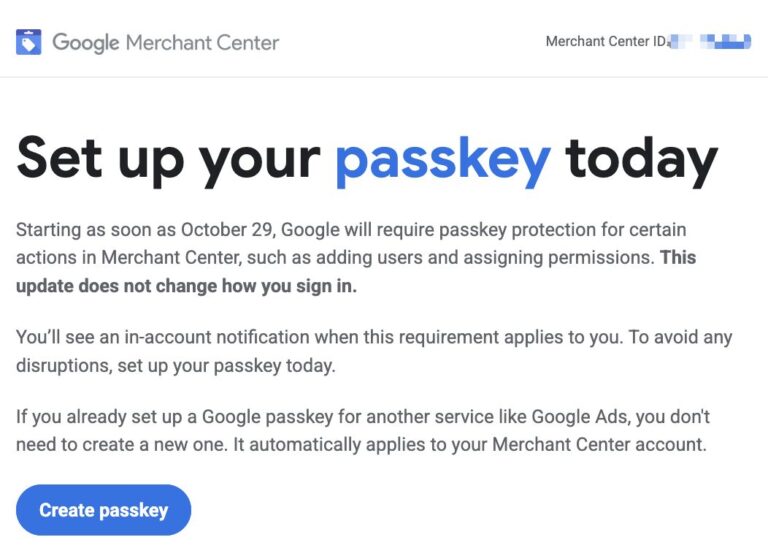
Passkey update

Thomas Eccel shared that Google just introduced Passkey support inside Google Ads accounts and it’s a big upgrade from the standard password setup.
Big shift in how commerce is starting to happen online

From this week, hundreds of millions of ChatGPT users can discover and shop products from Shopify merchants directly inside AI conversations.
With the Shopify Catalog making billions of products searchable in chat and checkout happening through an in-app browser shopping is becoming more conversational, contextual, and immediate.
What stands out is that merchants still keep full control over their brand experience: product pages, checkout customizations, payment methods like Shop Pay, and complex flows like cross-border sales, subscriptions, pre-orders, bundles, and multi-item carts all continue to work.
Commerce is no longer limited to websites or apps. It’s increasingly happening wherever decisions are being made, including inside AI chats.
Big update for Shopping advertisers in Europe

Google is expanding CSS Partner advertising to 15 new countries later this year.Launching first (Back-to-School ready):Cyprus, Luxembourg, Moldova, North Macedonia, Malta, Liechtenstein
Second wave (Holiday season ready):Bulgaria, Croatia, Lithuania, Slovenia, Serbia, Bosnia and Herzegovina, Montenegro, Estonia, LatviaThis expansion creates strong new opportunities to scale Shopping campaigns across Europe, especially in emerging markets.
If international growth is on your roadmap, now is the time to start preparing your feeds, bidding strategy and CSS setup.
Credit to Wouter Veenboer for sharing this update!
Apple Ads

Apple is bringing ads to Apple Maps this summer!
AI Agent

Google announced a new AI agent called Google Ads Advisor at Google NewFront 2026, focused mainly on saving time rather than introducing completely new capabilities.
Two standout features are: Help fixing disapproved ads: The AI can guide advertisers on how to resolve ad disapprovals, potentially reducing long support waits and manual troubleshooting.
Prompt-based custom charts: Users will be able to generate reports and charts simply through prompts, avoiding the usual complex reporting workflows (with hoped-for data download options).
Other updates from the announcement include:Confidential Publisher Match to connect first-party data with streaming publishers
Expanded CTV reach to 96% of ad-supported households
New formats like Pause Ads, YouTube Creator Takeovers, and a live sports bidding suite
Overall, the updates focus on automation, efficiency, and expanded reach across streaming and video advertising.
AI Matching

Hana Kobzová discovered that Google has Expand Creator Partnerships With AI Matching!
Apply recommendations automatically

Bob Meijer discovered that Google Ads experiments now have an auto-apply setting!
Shopscore

Ruben Runneboom discovered that Shopscore is now visible
Update policy

Google has updated the help center articles related to the below ad policies for improved organization and readability.
- Cryptocurrencies and related products
- Editorial
- Financial products and services
- Healthcare and medicines
- Limited ad serving
- Other restricted businesses
- Sexual content
- Sexual health and wellness
- Related policies, including:Google Ads Terms & ConditionsGoogle Ads API policiesList of advertising codesGoogle Ads beta featuresPromotional offers policy
This update aims to provide clearer information to advertisers and does not change enforcement of the policies.